
Last updated September 10, 2026
Level 1 sweep and inspection to the NFPA 211 annual standard - flue, crown, cap, and flashing checked and photographed
Chimney sweep logs do not sweep chimneys. They loosen some creosote - which then falls where a brush and vacuum still have to collect it.
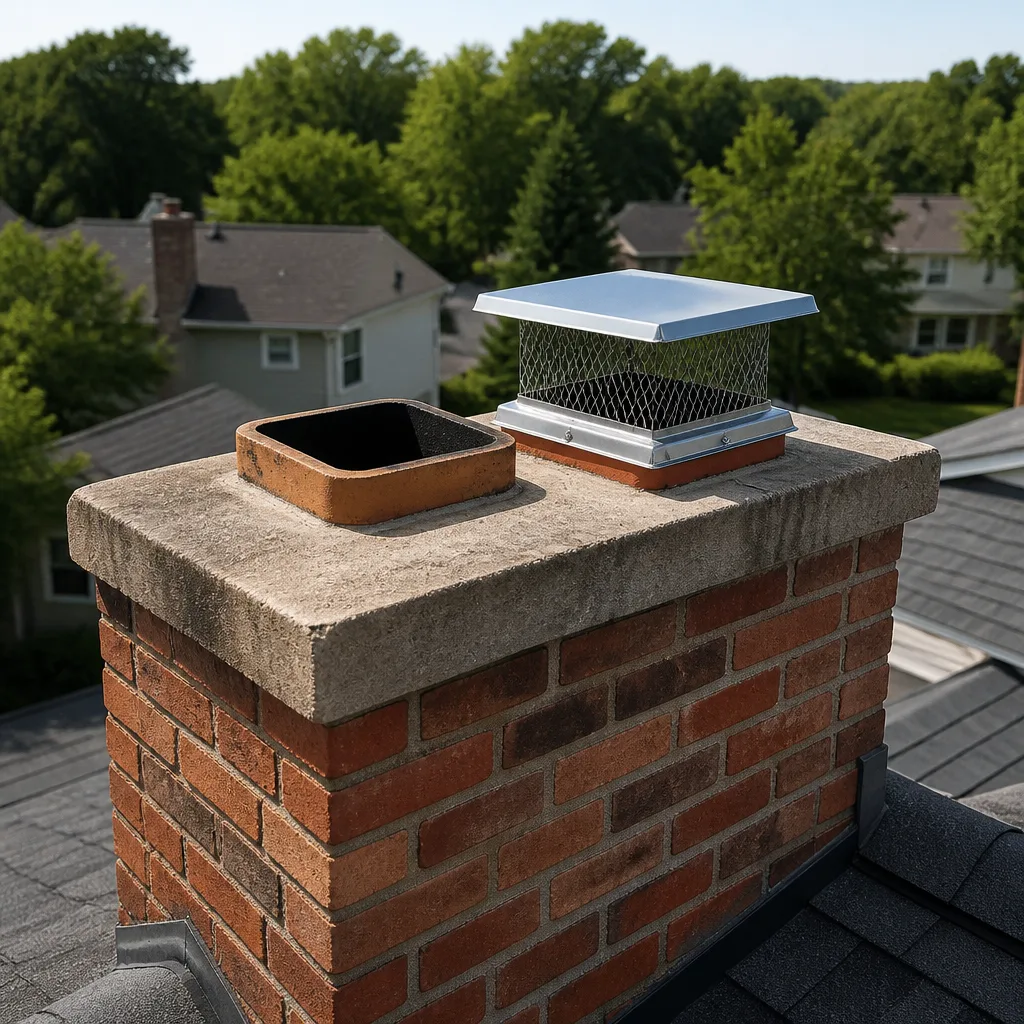
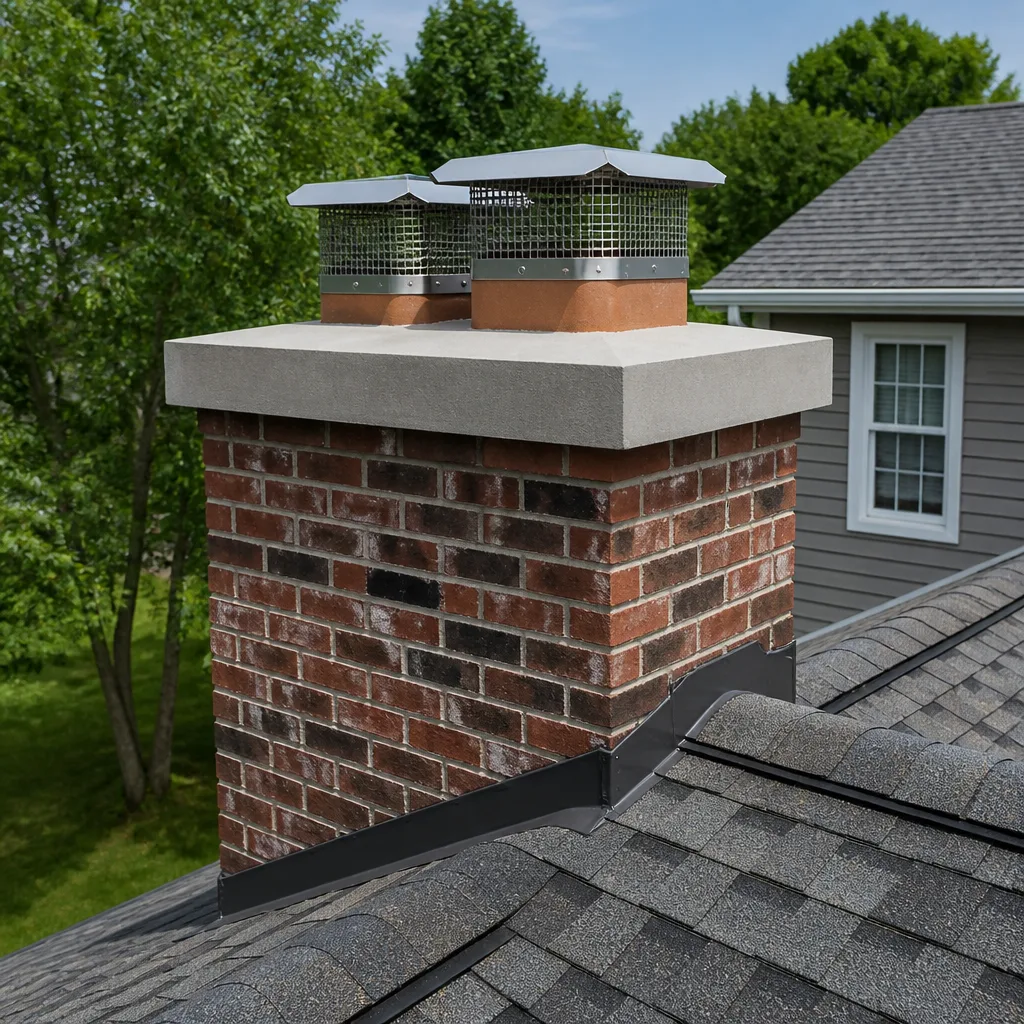
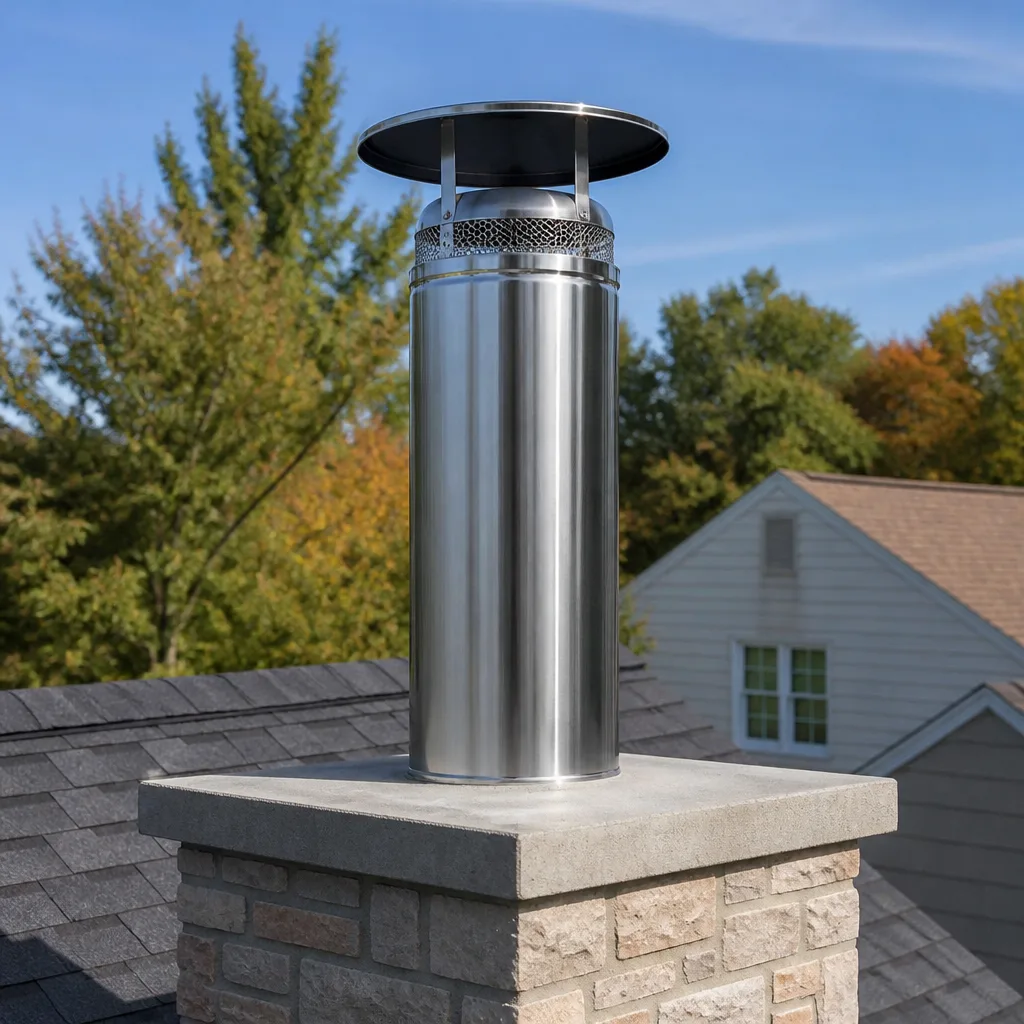
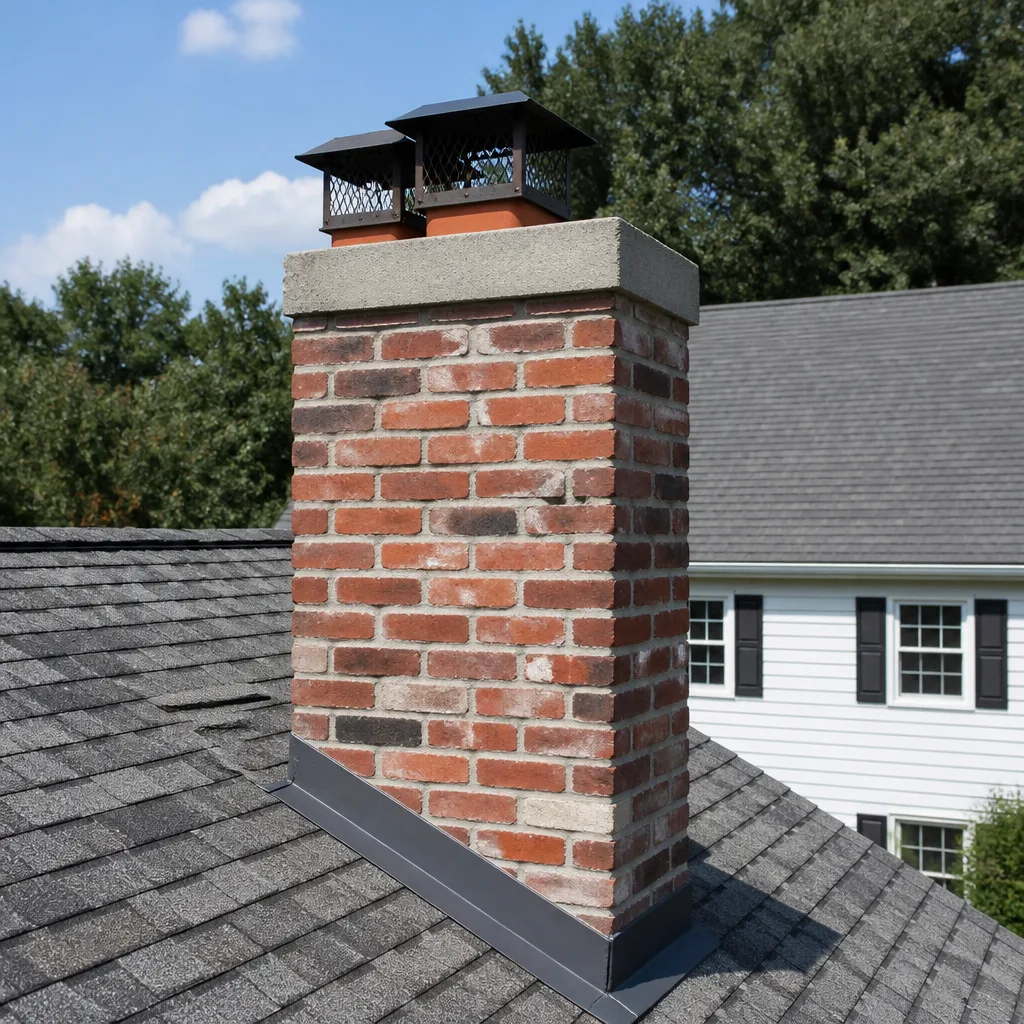
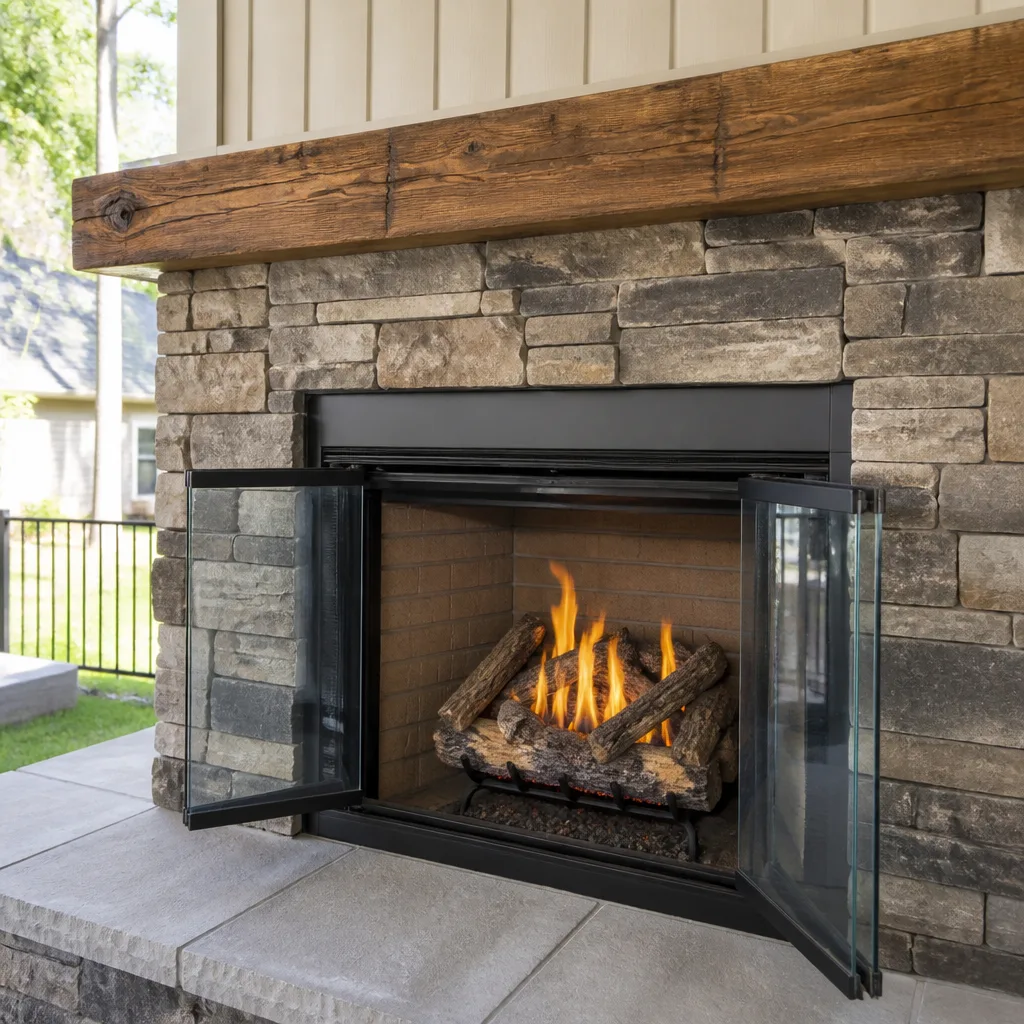
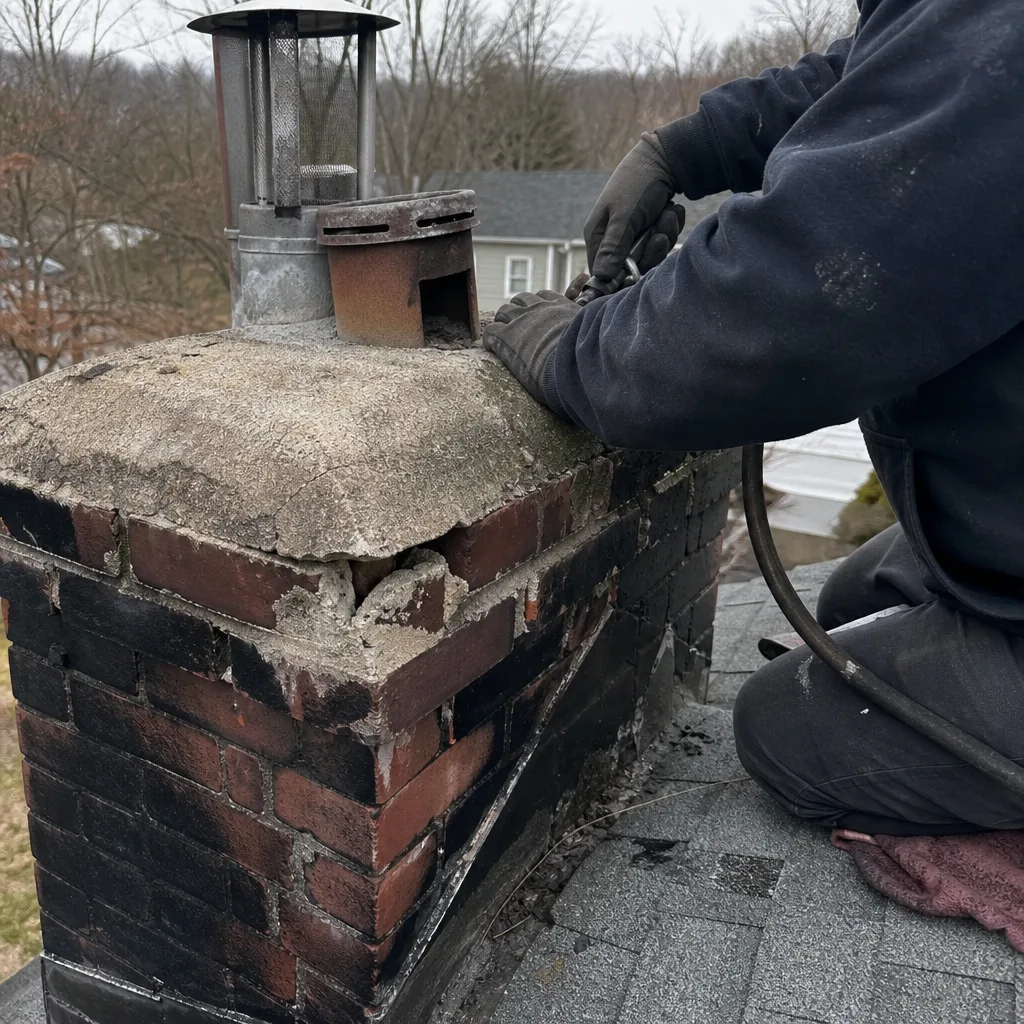 Before
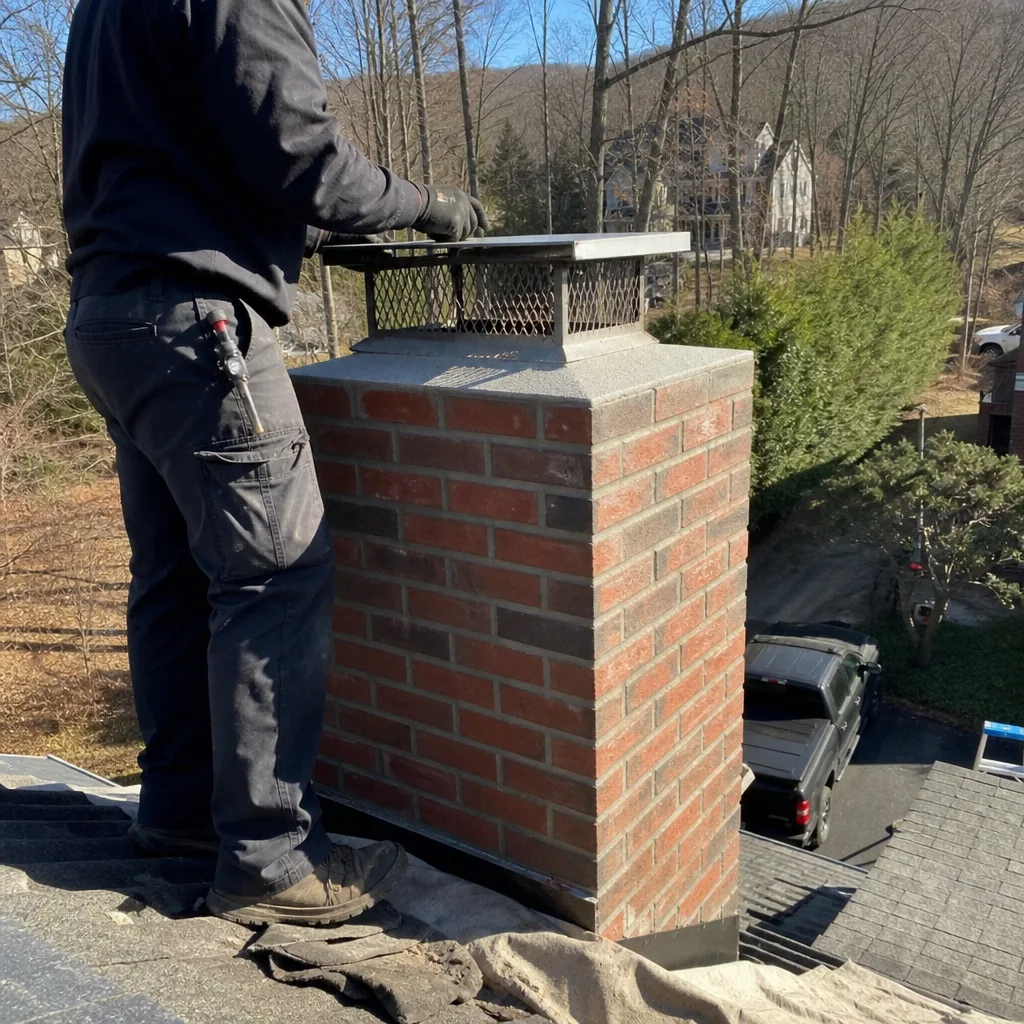 After
After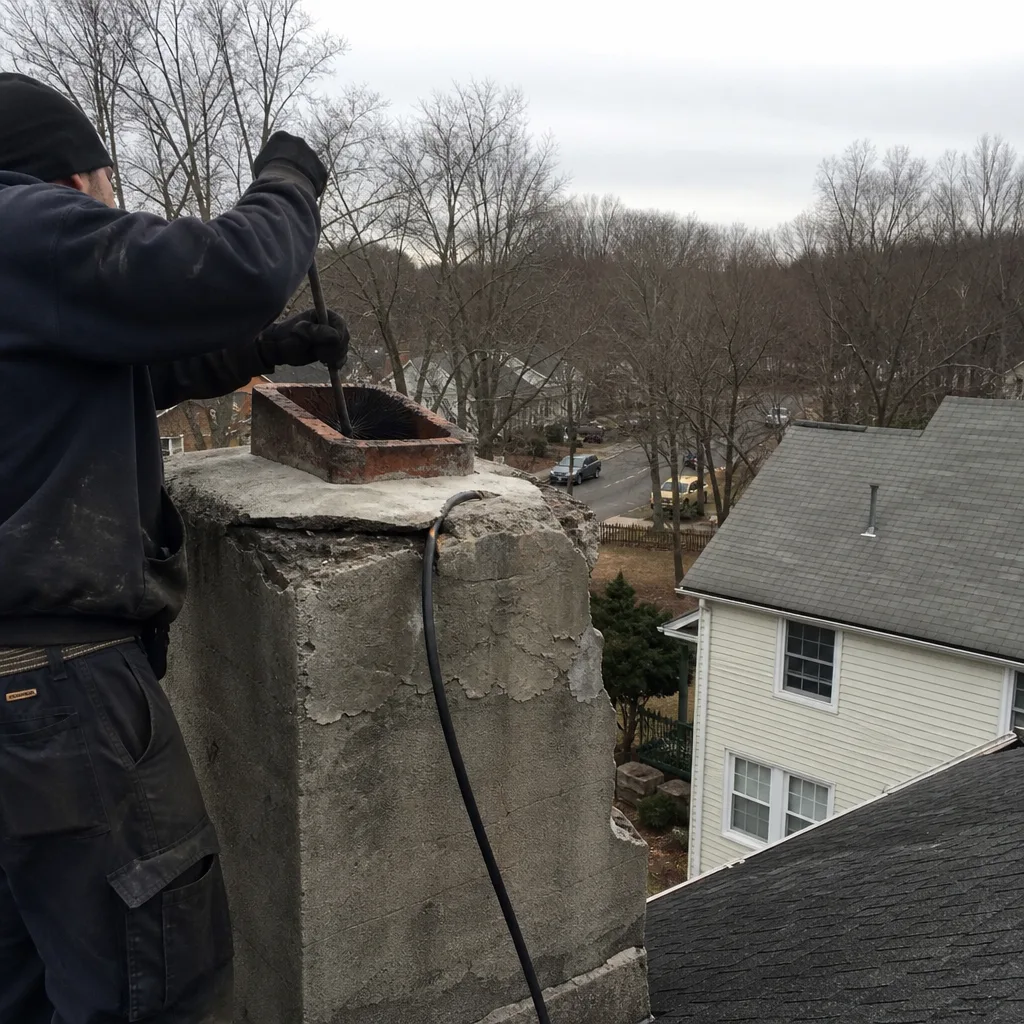 Before
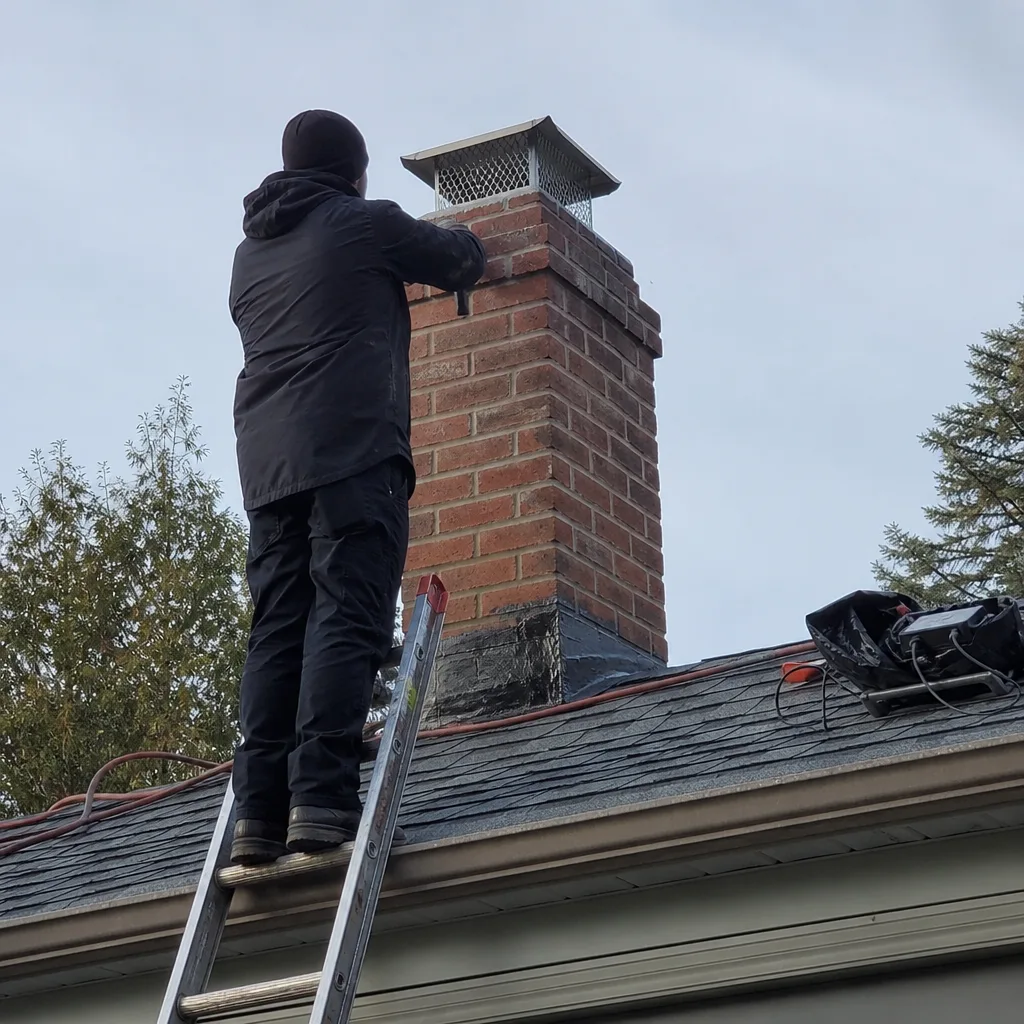 After
After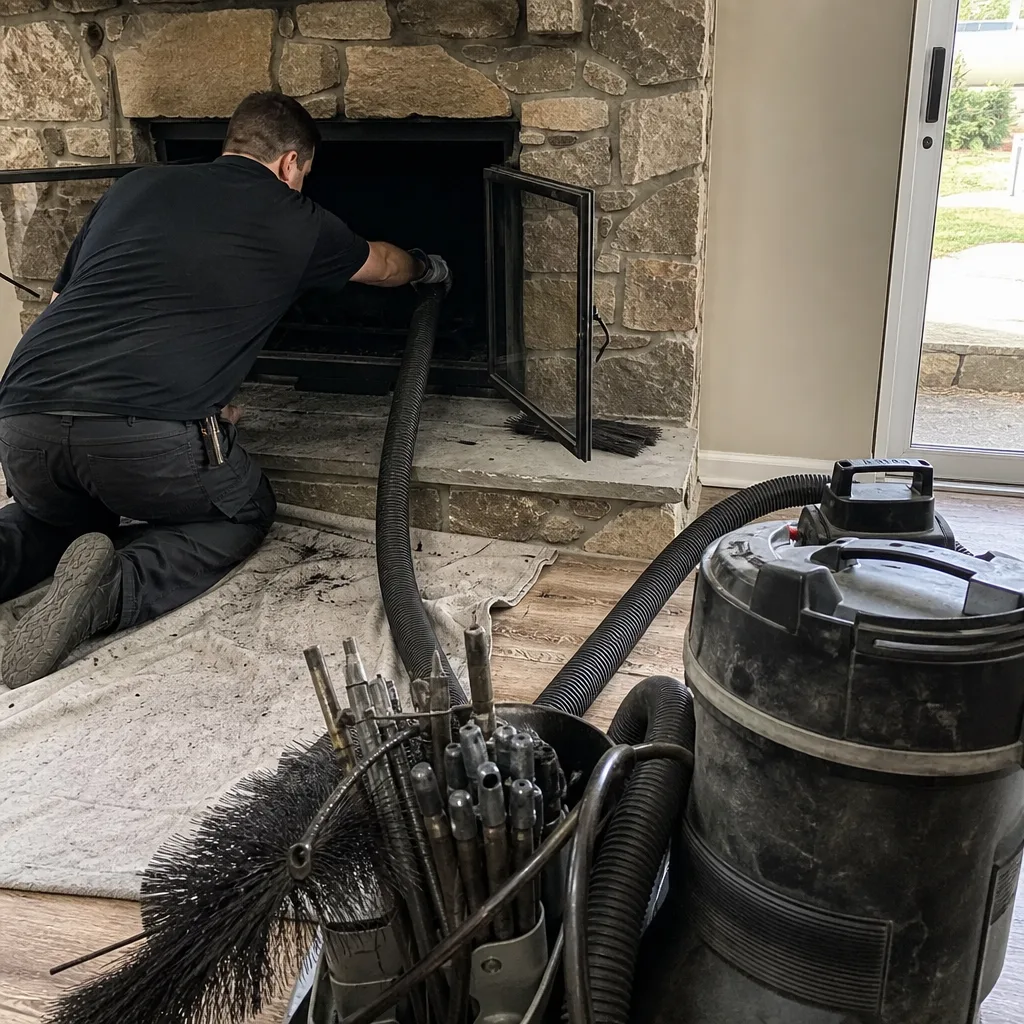 Before
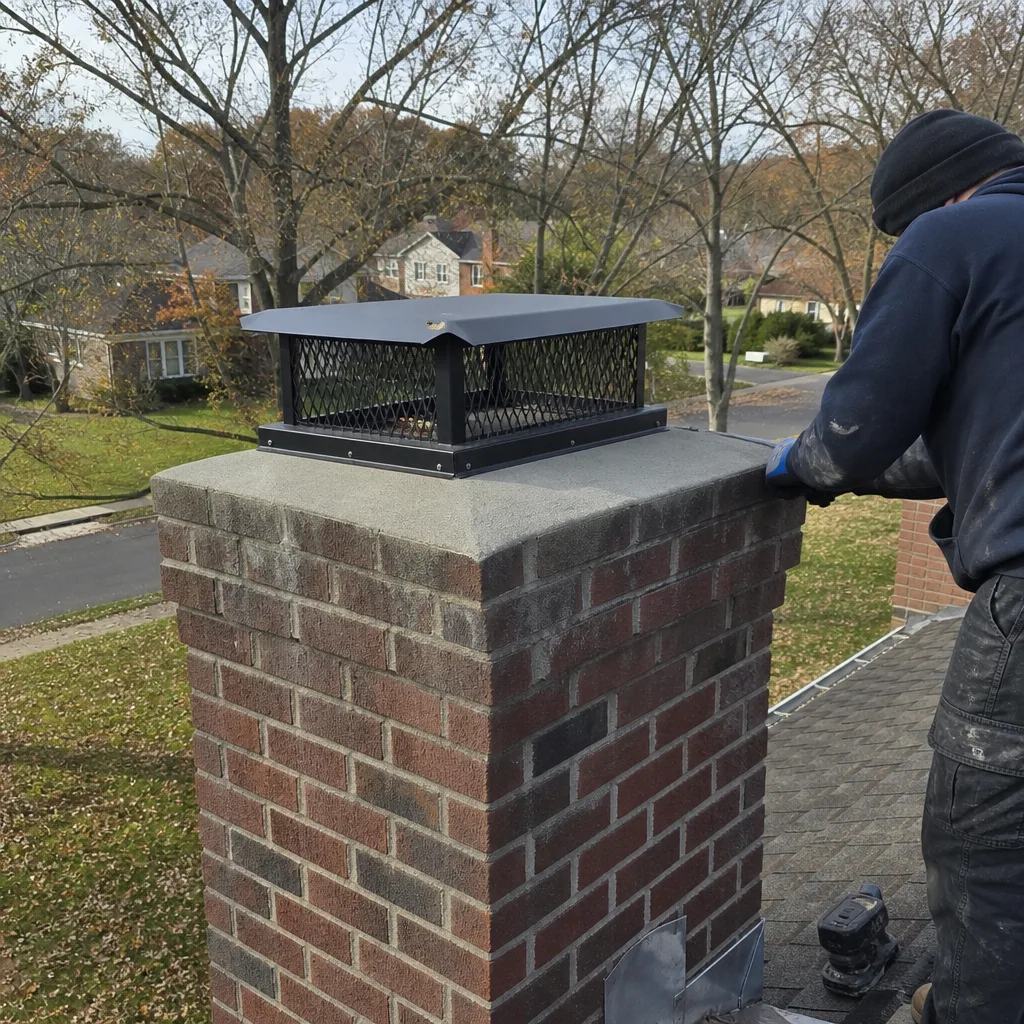 After
AfterChimney Cleaning Permits, Codes & Inspections in NY: What You Need to Know
Here’s a number that surprises most Rockland County homeowners: a chimney liner replacement runs $2,500 to $5,000 around here, and if that liner was installed without a permit, your homeowner’s insurance can legally refuse to cover a fire that traces back to it. Most people don’t discover this until after the fire. This guide walks through exactly where the permit line sits in New York State, how Rockland County towns actually enforce it, what inspectors look for, and how to fix a permitting problem you inherited from a previous owner. No code citations you’d need a law degree to parse. Just the practical version.
Quick Answer
Routine chimney sweeping and cleaning in New York State does not require a permit, and neither do most minor repairs like cap replacement or crown sealing, though our Chimney Cleaning & Sweep Maintenance Checklist for Rockland County Homeowners covers when to schedule each. The moment the work involves a new liner, a rebuild, or structural changes to the flue or firebox, most Rockland County towns want a building permit and a final inspection. Skip it and you’re carrying an insurance gap that most policies will enforce.
Table of Contents
- The Line Between Maintenance and Permitted Work
- How Rockland County Municipal Inspections Actually Work
- The Insurance Gap: Unpermitted Work and Your Claim
- NFPA 211: The Standard Your Sweep Should Know
- Previous Owner Left You Unpermitted Work. Now What?
- What Inspectors Actually Look At (And What They Don’t)
- Common Mistakes to Avoid
The Line Between Maintenance and Permitted Work
Let’s get the confusing part out of the way first. New York State does not have a single statewide chimney permit law. What triggers a permit is determined by your local building department, and in practice, Rockland County towns follow the same rough line. Here’s the plain-language version.
No permit needed:
- Chimney sweeping and creosote removal. This is maintenance, like changing your furnace filter, and no town in Rockland County requires a filing for it.
- Chimney cap replacement, as long as the new cap fits the existing flue tile and you’re not altering the structure.
- Crown sealing and minor repointing, which means filling cracks and resetting a few loose bricks, not rebuilds.
- Camera inspections and smoke tests. Nothing is being changed, so nothing needs to be filed.
- Installing or repairing a damper that sits at the top of the firebox.
Permit required:
- Chimney liner installation or replacement. This is the big one. A stainless liner like a DuraFlex system is a structural change to the flue, and every town we work in around Rockland County wants this permitted and inspected.
- Rebuilding a chimney from the roofline up, or replacing more than a few bricks in the firebox.
- Any change to the flue size, shape, or route.
- Converting a fireplace to a wood stove or insert and re-venting it through the existing chimney.
- Repairing a chimney after a fire has damaged the lining or structure.
Here’s the rule of thumb Wendell gives homeowners on the phone: if the sweep’s work ends with a brush and a vacuum bag, you never need a permit. If it ends with tools that alter the chimney’s structure, you probably do. And if you’re not sure, call your town’s building department before the work starts, not after. They’d rather answer your question than open an enforcement file.
One more thing worth knowing: a few towns in Rockland County also require a permit for a wood stove installation even when the chimney itself isn’t changing. It’s the appliance connection they want to inspect. If you’re adding a stove to a fireplace that only ever burned open fires, assume you need a filing.
How Rockland County Municipal Inspections Actually Work
Rockland County has five towns and a pile of incorporated villages, and yes, they do approach chimney work a little differently. Here’s what we’ve seen over the years, town by town, without naming names or pointing fingers.
Some of the stricter towns in Rockland County want a permit filed before a liner job starts, an inspection after the liner is set but before the chase or surround is closed up, and a final sign-off when the job is done. That means two visits from the building inspector, which adds a day or two to the job timeline. Other towns are more relaxed: one permit, one final inspection, and the inspector mostly wants to confirm the liner is the right size for the appliance and the termination cap has proper clearance from the roof line.
Turnaround time varies. In the slower villages, you can get a chimney permit issued in 48 hours if your paperwork is clean. In the busier building departments, especially during fall when every homeowner suddenly remembers they have a fireplace, figure a week or two. Summer is faster. If you’re planning a liner replacement before burning season, file the permit in August before the September rush.
What inspectors actually check at the final visit:
- The liner is listed and labeled for the fuel type. A gas liner in a wood-burning fireplace will fail inspection.
- The liner is the diameter the manufacturer specifies for the appliance it’s serving.
- Proper clearances to combustibles where the chimney passes through floors, walls, and the roof.
- The termination cap height above the roofline and its distance from windows, dormers, and neighboring rooflines.
- The damper has been either removed or permanently locked open if a direct-connect liner now runs through it.
- The cleanout door at the base of the flue is accessible and properly sealed.
One inspector in Rockland County we deal with regularly pulls out a flashlight and a mirror and actually looks up the flue. Another won’t check the interior at all but will spend ten minutes on the roof checking spark arrestor mesh gauge. The point is you never know which inspector you’ll draw, so the work needs to be right before the first visit.
The Insurance Gap: Unpermitted Work and Your Claim
This is the section most homeowners skim past and then wish they hadn’t. Here’s how it plays out in real life.
You have a chimney fire in January. The fire department writes it up. Your insurance adjuster comes out and starts asking for paperwork: when was the liner installed? Who did the work? Was it inspected? If the answer to that last question is no, your insurer can deny the claim based on the policy’s exclusion for unpermitted work. And yes, they do enforce it. We’ve talked to Rockland County homeowners who lost six-figure claims over a liner they paid a handyman $1,200 to install.
Not every policy denies every unpermitted claim. Some insurers will pay the claim and then drop you at renewal, which is its own kind of problem. Some will pay the claim minus the cost of bringing the work up to code. But the reason to permit a liner replacement isn’t just about following the rules. It’s about creating a paper trail that protects you when something goes wrong.
What closes the gap:
- Permit filed before work starts. This establishes that you intended to do it legally from day one.
- Final inspection signed off after the work is done. A permit without a final inspection is almost as bad as no permit. The file is still open, and an insurer can treat the work as incomplete.
- Receipt and warranty from the installer. The warranty from a liner manufacturer like Olympia Chimney or DuraFlex only applies if the liner was installed to the manufacturer’s spec, and the best proof of that is an inspection report.
- Photos, before and after. Not glamorous, but when an adjuster asks when the liner was replaced, a dated photo of the old liner coming out and the new one going in settles a lot of arguments.
If your chimney work is already unpermitted and you want to fix it before you have a claim, see the section on previous-owner problems below. It’s a solvable problem, usually without any drama.
NFPA 211: The Standard Your Sweep Should Know
New York sweeps don’t work from a random checklist. The baseline standard is NFPA 211, the National Fire Protection Association’s Standard for Chimneys, Fireplaces, Vents, and Solid Fuel-Burning Appliances. It’s not a law on its own, but it’s what the International Residential Code references for chimney sizing and clearance, and it’s the standard any competent sweep follows for inspection levels.
Most homeowners have never heard of NFPA 211. That’s fine. What you should know is that it defines three levels of chimney inspection:
- Level 1: The basic inspection that accompanies every sweep. The accessible portions of the flue, the firebox, the damper, and the exterior above the roofline get examined with a light and a trained eye. This is what you should expect from any routine cleaning.
- Level 2: A camera inspection, required whenever the property changes hands, after a chimney fire, after an earthquake or severe weather event, or when the appliance or liner is changed. If your sweep recommends a Level 2 and tries to sell you a liner without showing you the camera footage, call someone else.
- Level 3: The nuclear option. This involves opening up the chimney chase or removing portions of the structure to access concealed areas, and it’s rarely needed outside of significant damage or renovation.
How to verify your sweep actually knows this standard: ask them what inspection level they’re performing and why. If they blink, they don’t work to NFPA 211. If they say “Level 1 is included with the sweep, and here’s what I’m looking for,” you’re talking to someone who knows their trade. In Rockland County, a Level 2 camera inspection during a sweep has become the default for older homes with original clay tile liners, and that’s a good thing - one of several chimney cleaning warning signs Rockland County homeowners should watch for. Terra cotta flue tiles installed in the 1970s are at the end of their expected life, and the camera is the only honest way to know.
Previous Owner Left You Unpermitted Work. Now What?
This happens constantly in Rockland County, especially in homes that changed hands during the 2020-2022 buying frenzy when inspections got waved to win bids. You bought a house, moved in, lit a fire, and then noticed something that looks newer than the house around it. A stainless liner poking out of a 1960s chimney. A rebuilt crown. A firebox that’s too clean.
Now you’re wondering if the work was permitted, and whether it becomes your problem. It does, but only if you let it. Here’s the practical sequence Wendell walks homeowners through:
- Check the town’s permit records. Most Rockland County building departments have either an online portal or a phone line where you can search by address. It takes ten minutes. Look for any chimney-related permits issued in the last twenty years.
- If the work was permitted but never got a final inspection, schedule one. The permit is still open. The town will send an inspector. If the work is sound, they’ll close the file and you’re done. If it needs correction, you found out before a fire did.
- If the work was never permitted, talk to your town’s building department. This is the step homeowners dread, and it’s almost always anticlimactic. Most towns have a process for retroactive permits or “as-built” filings. You may need a licensed contractor to inspect the work and certify it, but you won’t be fined just for showing up and asking.
- Have a Level 2 camera inspection done regardless. The paperwork tells you whether the work was filed. It doesn’t tell you whether it was done right. A camera inspection will tell you both, and it’s the fastest way to catch a liner that’s too small for the appliance, a missing block-off plate, or a termination cap that doesn’t meet clearances.
One Rockland County homeowner we worked with in 2024 bought a house with a beautiful new-looking liner. No permit on file. The camera showed the liner was a gas-rated liner connected to a wood stove. The entire job had to be redone. The town inspector who signed off on the retroactive permit actually thanked him for coming forward before anyone got hurt. That’s usually how it goes.
If you’re planning to sell sometime in the next few years, resolving unpermitted work now, before the buyer’s home inspector flags it, is always cheaper. A buyer who discovers unpermitted chimney work will either walk or demand a concession. A seller with a clean permit file and a recent Level 2 report sells the house without that fight.
What Inspectors Actually Look At (And What They Don’t)
To be honest, a Rockland County chimney inspection is not a forensic audit. The inspector is there to verify a short list of safety-critical items, not to admire the craftsmanship. Here’s what you can expect, and just as usefully, what you won’t be quizzed on.
What they check:
- Liner material and listing. The tag on the liner has to match the fuel type. No exceptions.
- Liner diameter. An undersized liner is the single most common reason a chimney job fails inspection in Rockland County. The liner must be sized to the appliance, not to whatever was on the shelf.
- Clearances at penetrations. Two inches of clearance to combustibles is the code baseline for a masonry chimney. Less, and you need a chase or a listed wall pass-through.
- Termination height. The cap has to rise at least three feet above the roofline penetration and at least two feet above anything within ten feet, including dormers and neighboring rooflines. On a steep roof in an older Rockland County neighborhood, this is where a lot of installations fail.
- Combustion air. Newer fireplaces and stoves need a source of outside air, and inspectors increasingly look for it, especially in tightly-built homes.
- Cleanout accessibility. If the inspector can’t reach the cleanout door or it’s sealed shut, they’ll flag it.
What they generally don’t check:
- Creosote accumulation. That’s the sweep’s job before the inspector arrives. The inspector assumes the chimney is clean at the time of inspection.
- Aesthetic condition of the masonry. Cracked bricks are a structural issue, but minor efflorescence or staining won’t fail an inspection.
- Whether the fireplace drafts well. They check for safe construction, not for performance. A fireplace that smokes on windy days is your problem to solve, and it usually comes down to flue height or negative pressure in the house, not a code violation.
- Your wood supply. Unless there’s a clear and present fire hazard, inspectors don’t care how you season your firewood.
If you walk into the inspection with the liner tag still attached, the permit paperwork in hand, and a clean flue from the sweep, you’re ahead of ninety percent of the inspections that happen in this county. The other ten percent are the ones where someone skipped the sweep and the inspector sees a third-degree glaze and starts asking questions.
Common Mistakes to Avoid
- Letting a handyman replace a liner without a permit. A liner is not a handyman project. It’s a fire-containment system, and the $800 saved on labor will look small when the claim is denied.
- Filing the permit but never completing the final inspection. A permit that’s still open is a technical legal problem and an insurance problem. Close the file. This is the most common mistake in Rockland County, and the easiest to fix.
- Assuming the home inspector covered it at purchase. A standard home inspection is visual. It does not include a camera run down the flue, and it rarely catches liner failures behind masonry. Buy the house if you must, but get a Level 2 inspection before your first fire.
- Connecting a wood stove to an old clay tile flue and calling it good. Clay tile was never intended to handle wood stove temperatures and the condensate that comes with them. If a stove is going in, a liner goes in, and yes, it needs a permit.
- Covering unpermitted work with a quick cosmetic patch before selling. Realtors see this all the time, and so do buyers’ inspectors. A fresh coat of paint over an unpermitted liner doesn’t close the permit file. It just makes you the seller who hid something.
- Waiting until fall to file the permit. Rockland County building departments get swamped in September and October. Homeowners who file in August get their inspections done before the first cold snap. Everyone else waits.
When to Call a Professional
If your chimney has never been swept in the years you’ve owned the home, start with a sweep and a Level 2 camera inspection. Our Complete Guide to Chimney Cleaning in Rockland County explains what happens at each step. If the camera shows missing mortar joints, cracked flue tiles, or a liner that’s spalling and sloughing into the firebox, the conversation moves from maintenance to repair, and from repair to permits. If you’re planning to install a wood stove or insert this year, call before you buy the unit. The liner sizing drives the permit, and the permit drives the installation. If a previous owner left you unpermitted work, a licensed sweep can inspect it, document it, and tell you exactly what the town is going to want to see. Top Hat Chimney offers free estimates in Rockland County - call (845) 599-0832.
Frequently Asked Questions
No. Routine chimney sweeping, creosote removal, cap replacement, and crown sealing are maintenance and do not require a permit anywhere in Rockland County or New York State. A permit becomes necessary when the flue structure itself is altered, such as a liner installation or a rebuild.
A stainless liner replacement in Rockland County typically costs between $2,500 and $5,000, depending on the height of the chimney, the liner diameter, and whether the old liner needs to be removed first. The permit fee is a small line item on top of that, usually under a few hundred dollars depending on the town. Call (845) 599-0832 for a fixed-price quote.
You’ll have an open code issue with your town’s building department, and your homeowner’s insurance may deny a future claim that traces back to the unpermitted work. Most Rockland County towns allow retroactive permits, but the process is always faster and cheaper before the work is done than after.
Once a year, burn or no burn. Chimneys break in the off-season too, and Rockland County’s freeze-thaw cycles are rough on masonry. A yearly sweep catches spalling bricks and flue tile failures before they become a liner replacement.
Yes. The exclusion is standard policy language, and we’ve seen it enforced in Rockland County. The insurer argues that the fire would not have occurred if the work had been inspected, and that’s often true. The paper trail of a permit and final inspection is the thing that protects your claim.
Yes, and you should. A retroactive permit through your town’s building department, backed by a Level 2 camera inspection that documents the work is sound, resolves the issue without drama. Resolving it now avoids a buyer’s concession or a dead deal later.
The Bottom Line
Routine chimney cleaning in New York needs no permit, no inspection, and no paperwork. The complications start when the sweep finds something that needs repair, and they escalate fast when a liner gets replaced without a filing. In Rockland County, the difference between a permitted liner job and an unpermitted one is the difference between a covered claim and a denied one, and the distance between those two outcomes is entirely within your control. Sweep yearly. Permit anything structural. Close the permit with a final inspection. And if the previous owner skipped a step, get right with the town before the weather turns cold. For more guides & resources, see our blog.
Written by Wendell Pike, Owner at Top Hat Chimney, serving Rockland County since 1999.