
Last updated September 10, 2026
Level 1 sweep and inspection to the NFPA 211 annual standard - flue, crown, cap, and flashing checked and photographed
Chimney sweep logs do not sweep chimneys. They loosen some creosote - which then falls where a brush and vacuum still have to collect it.
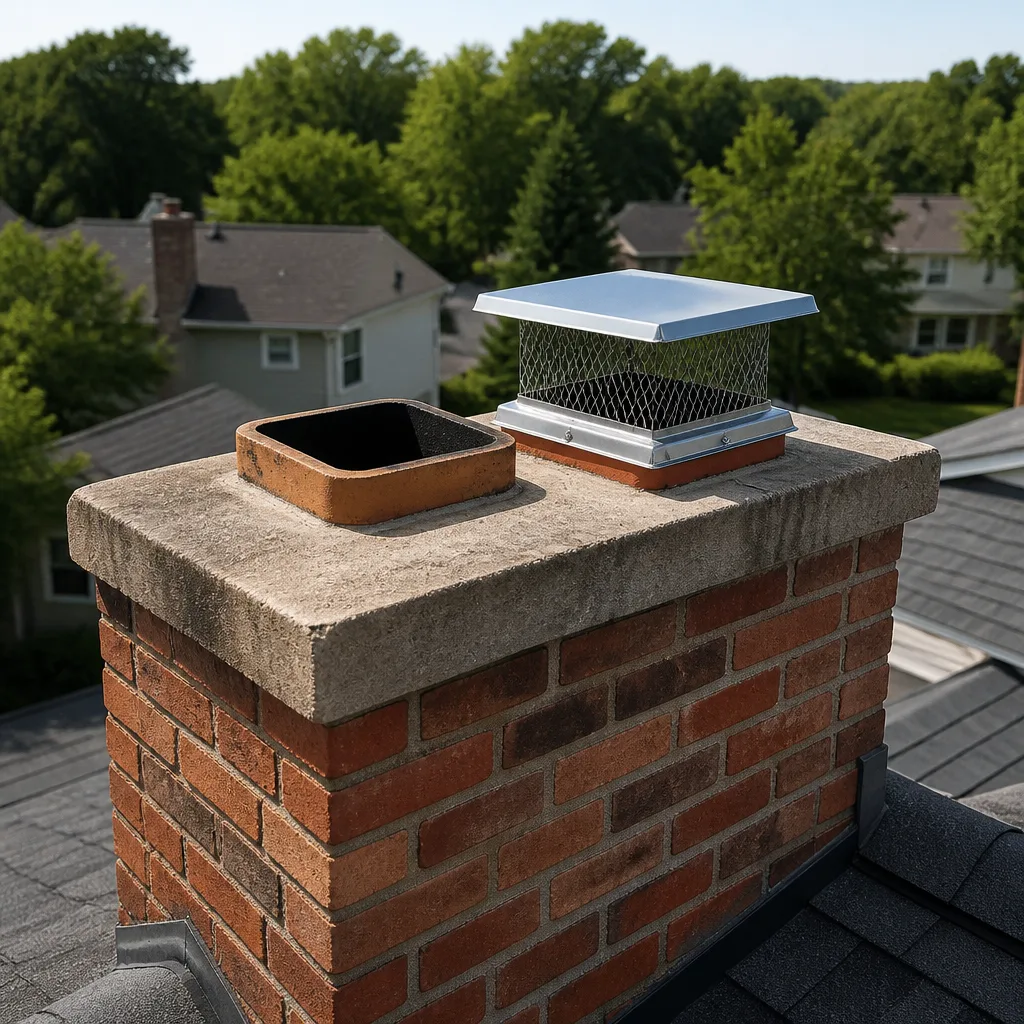
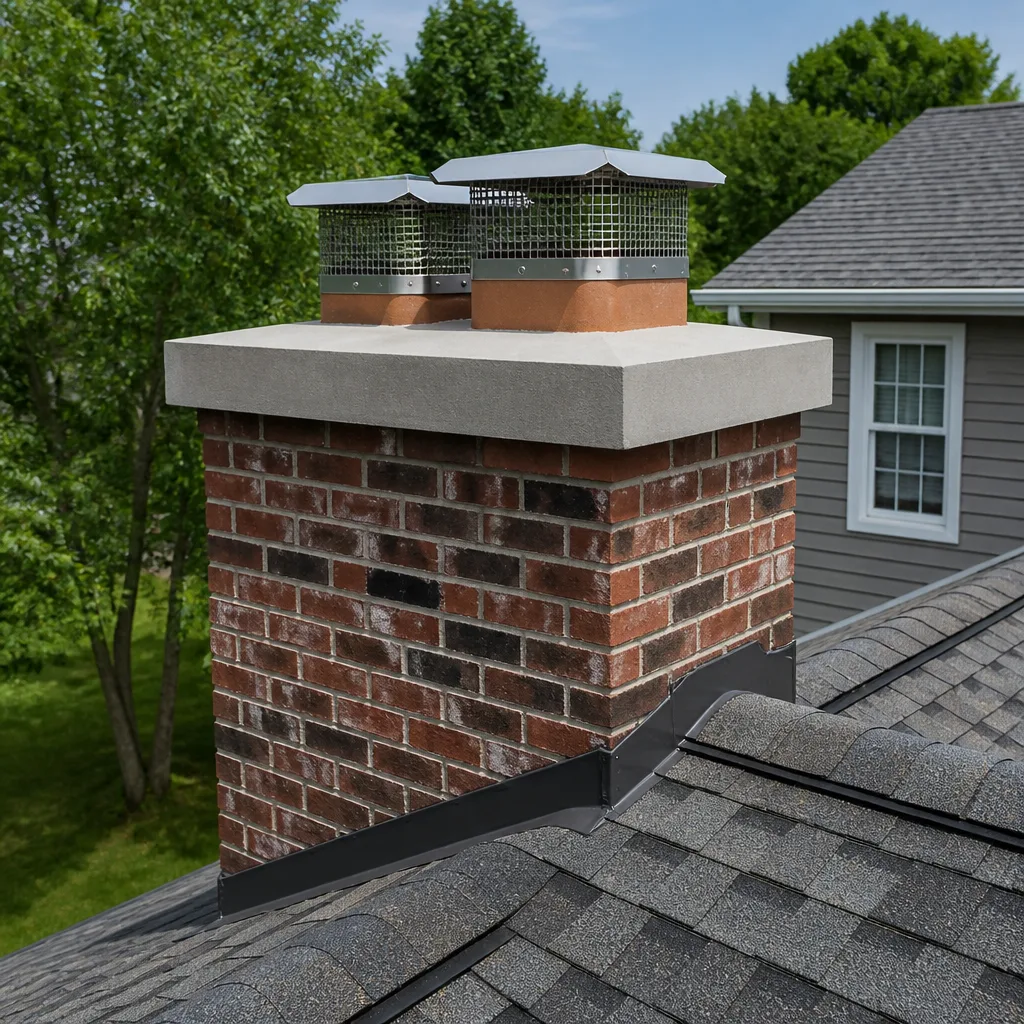
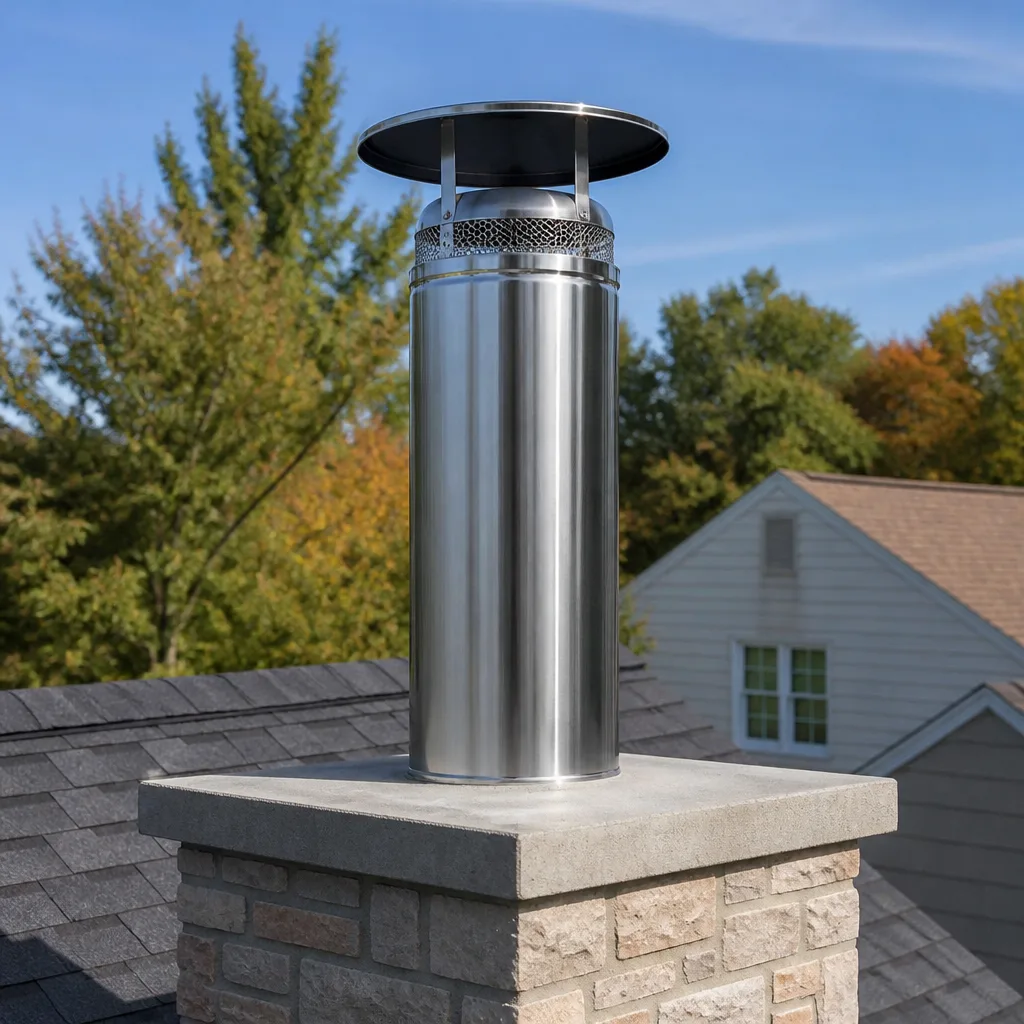
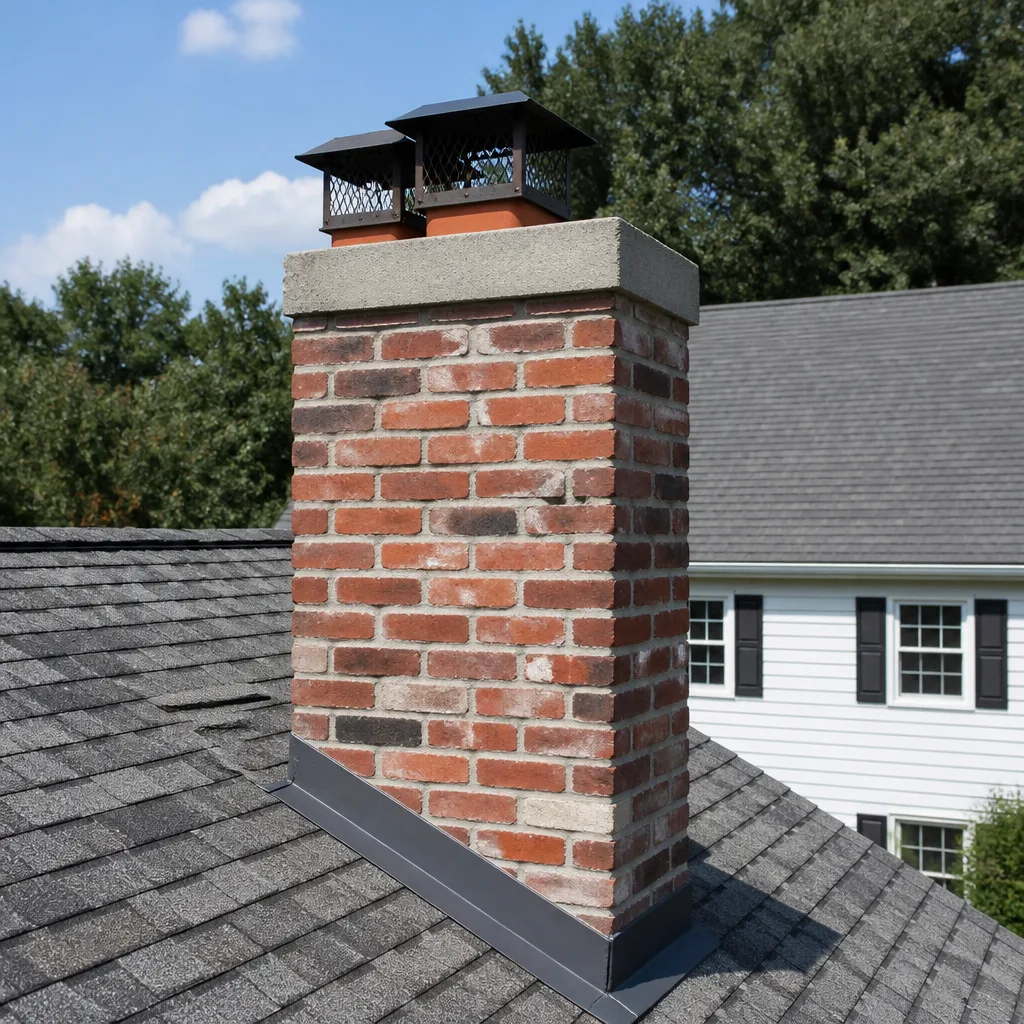
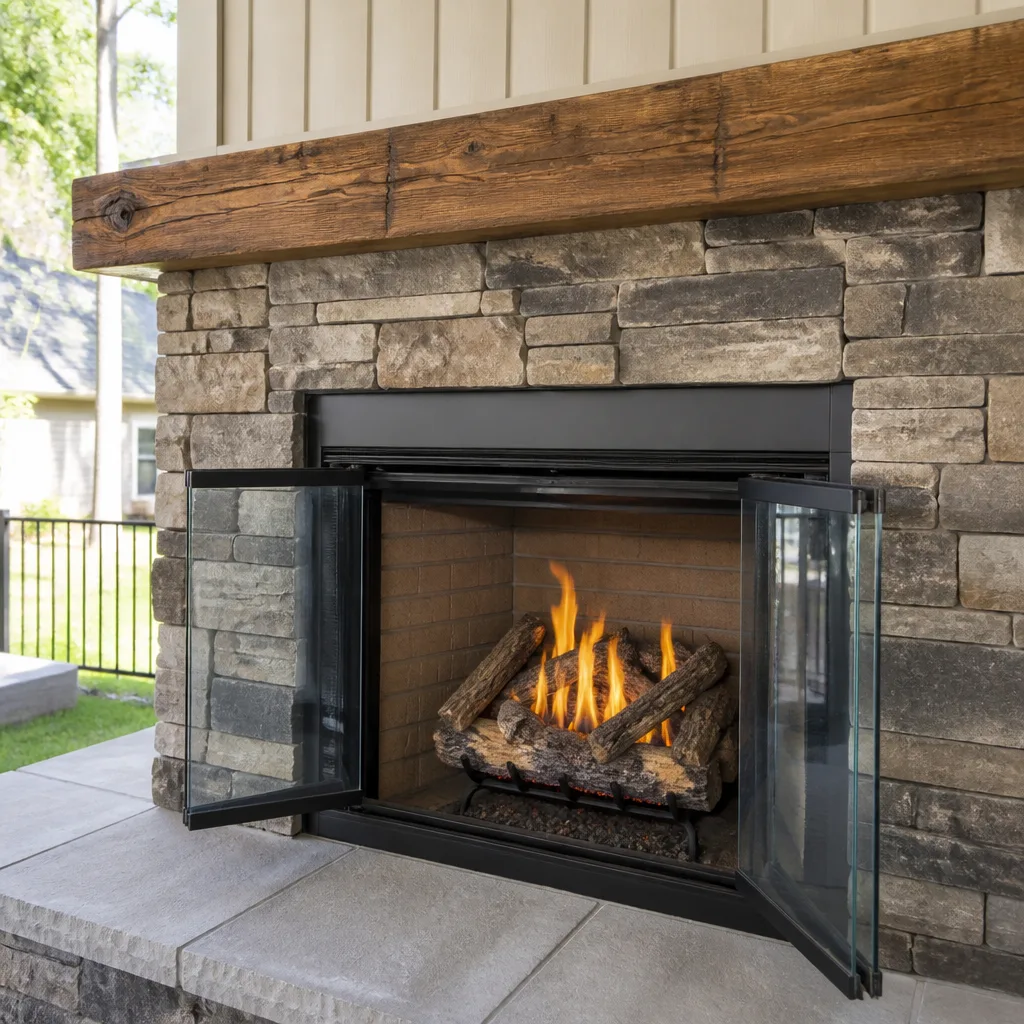
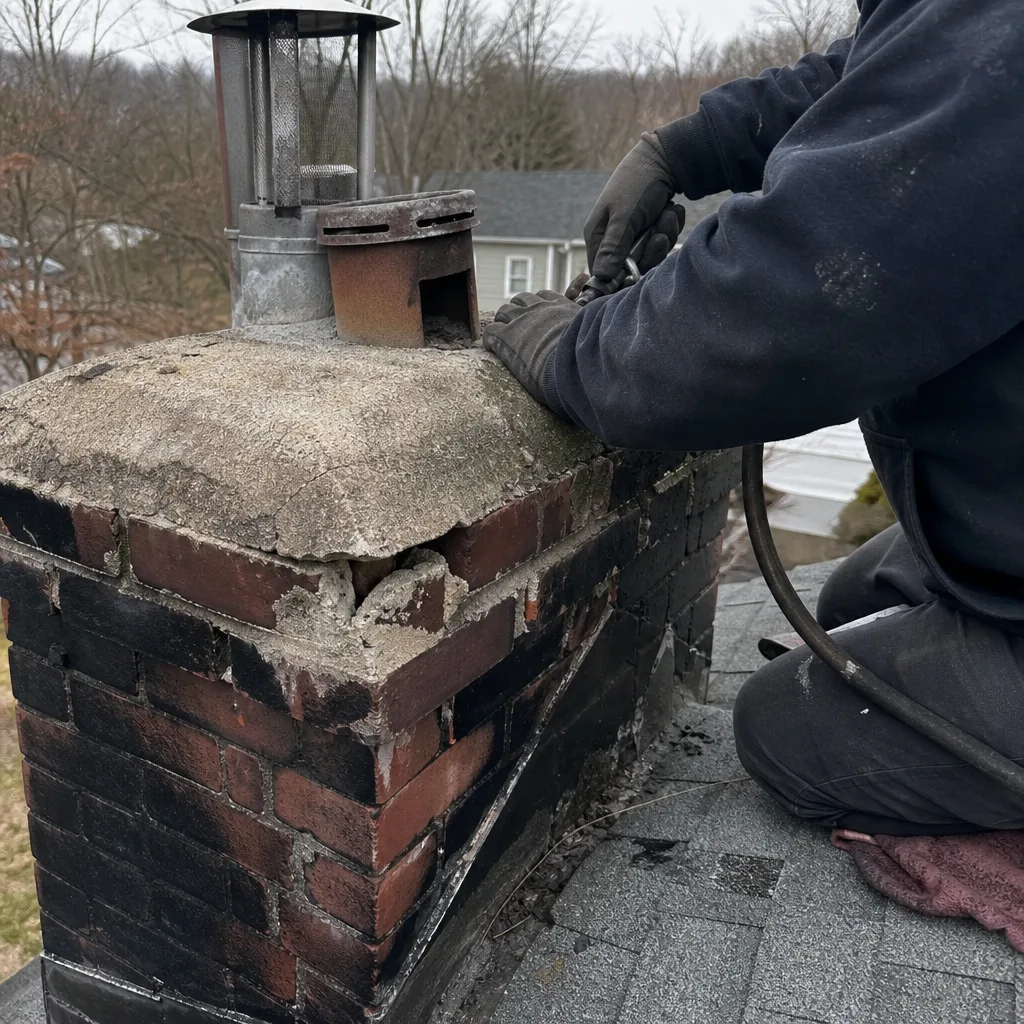 Before
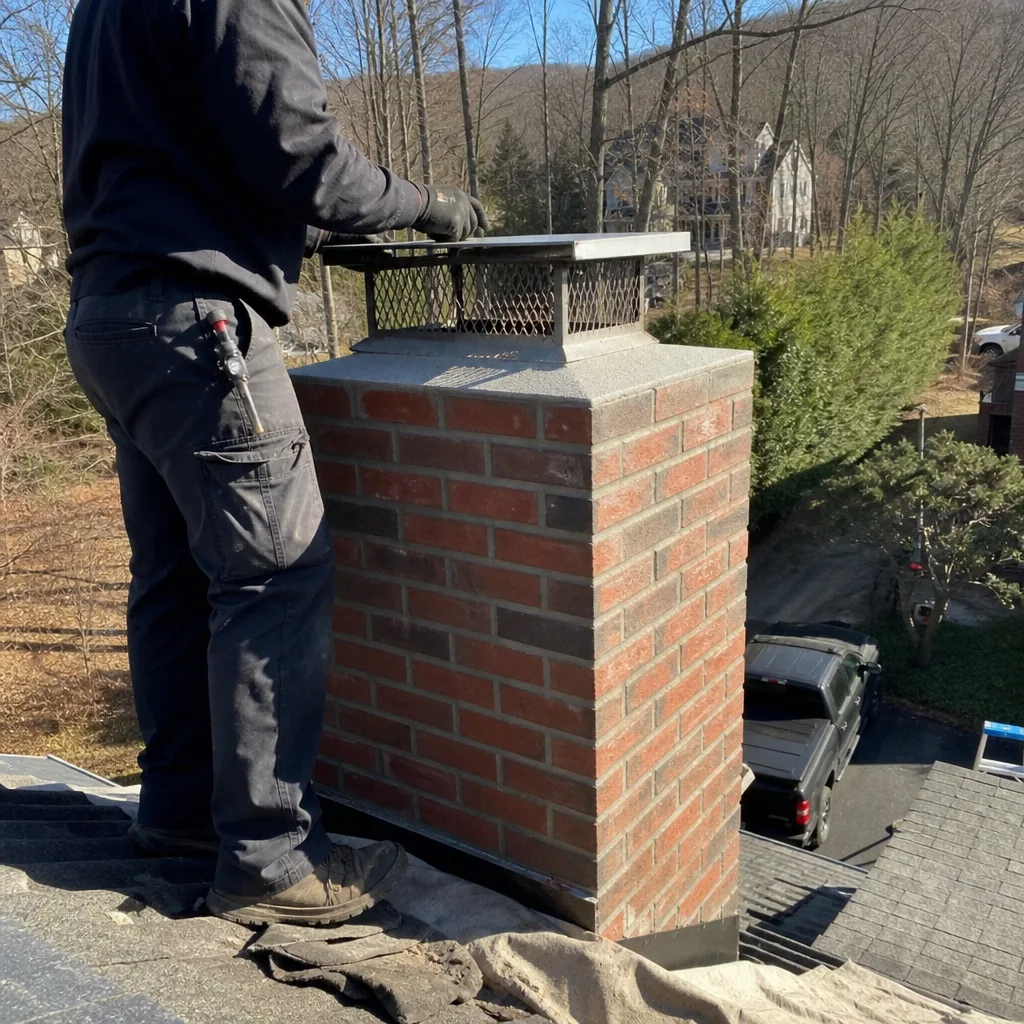 After
After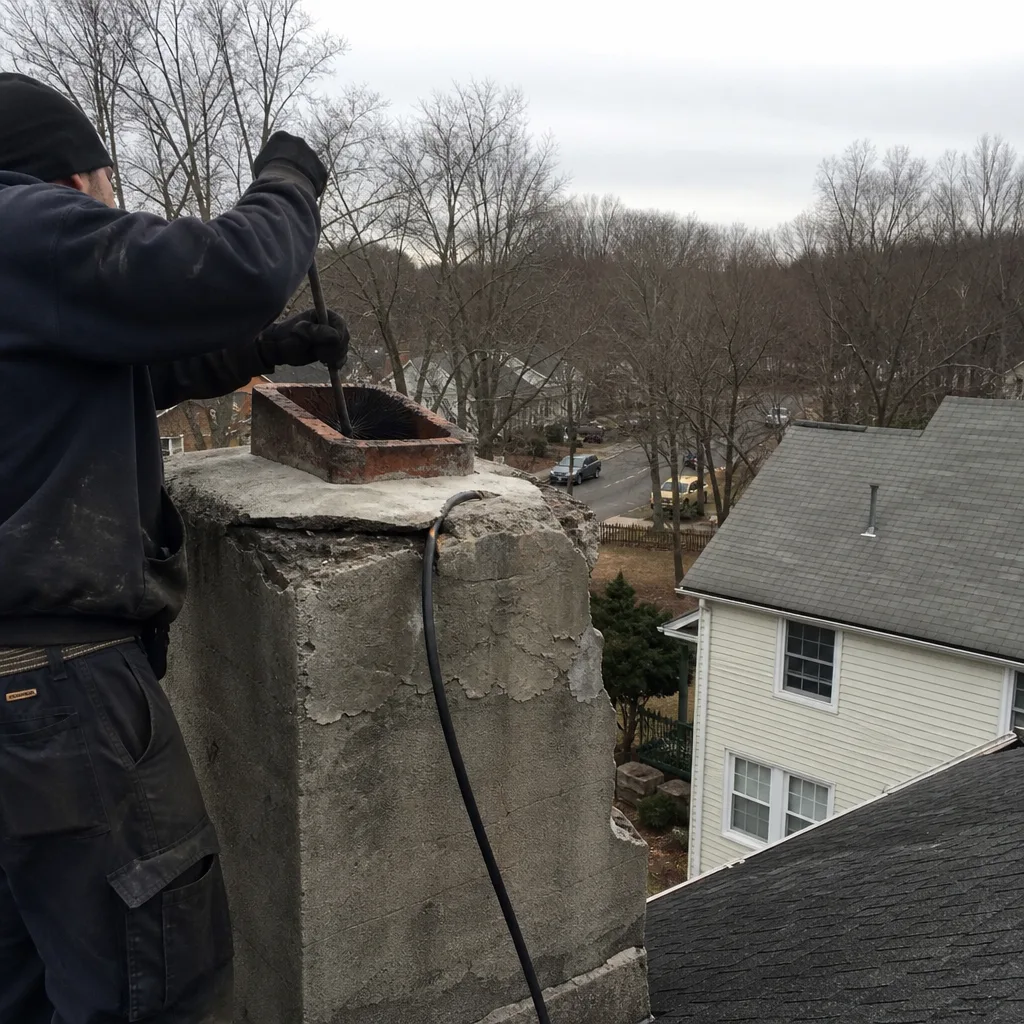 Before
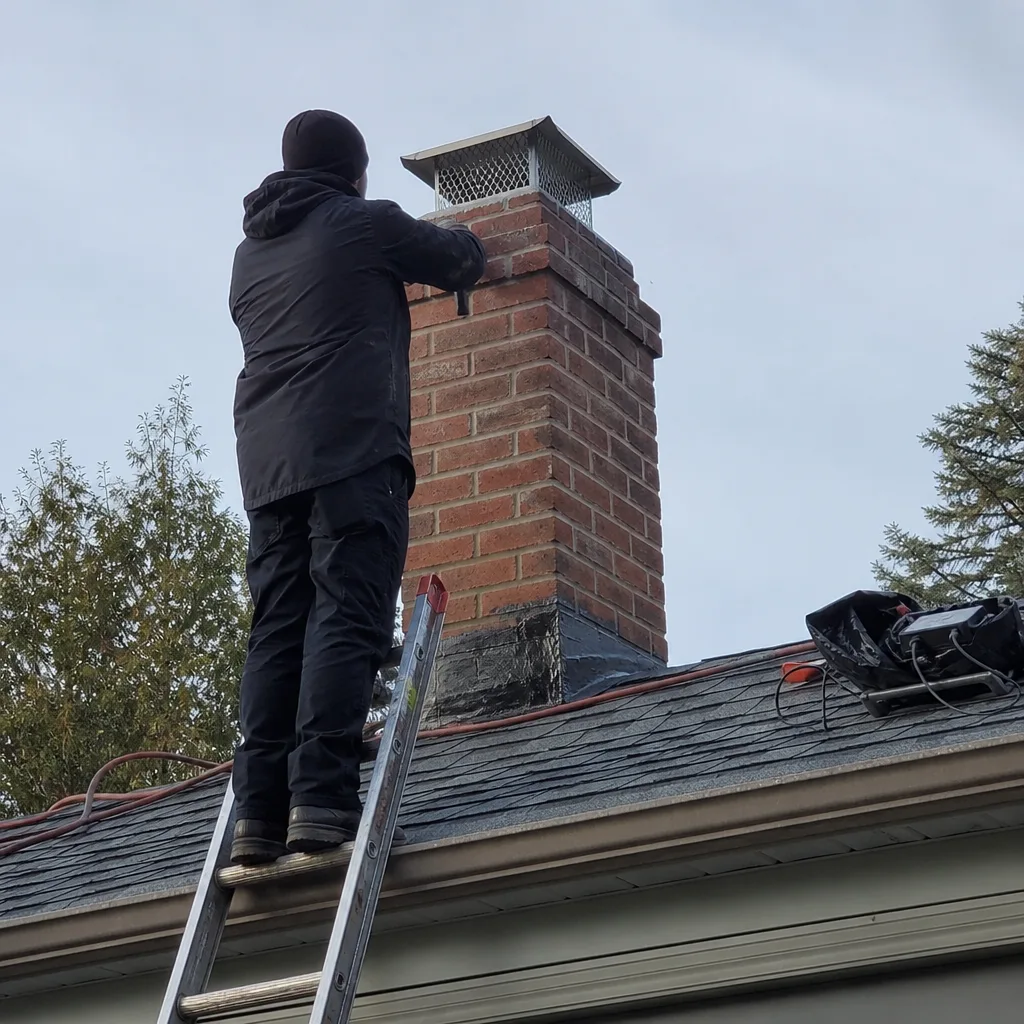 After
After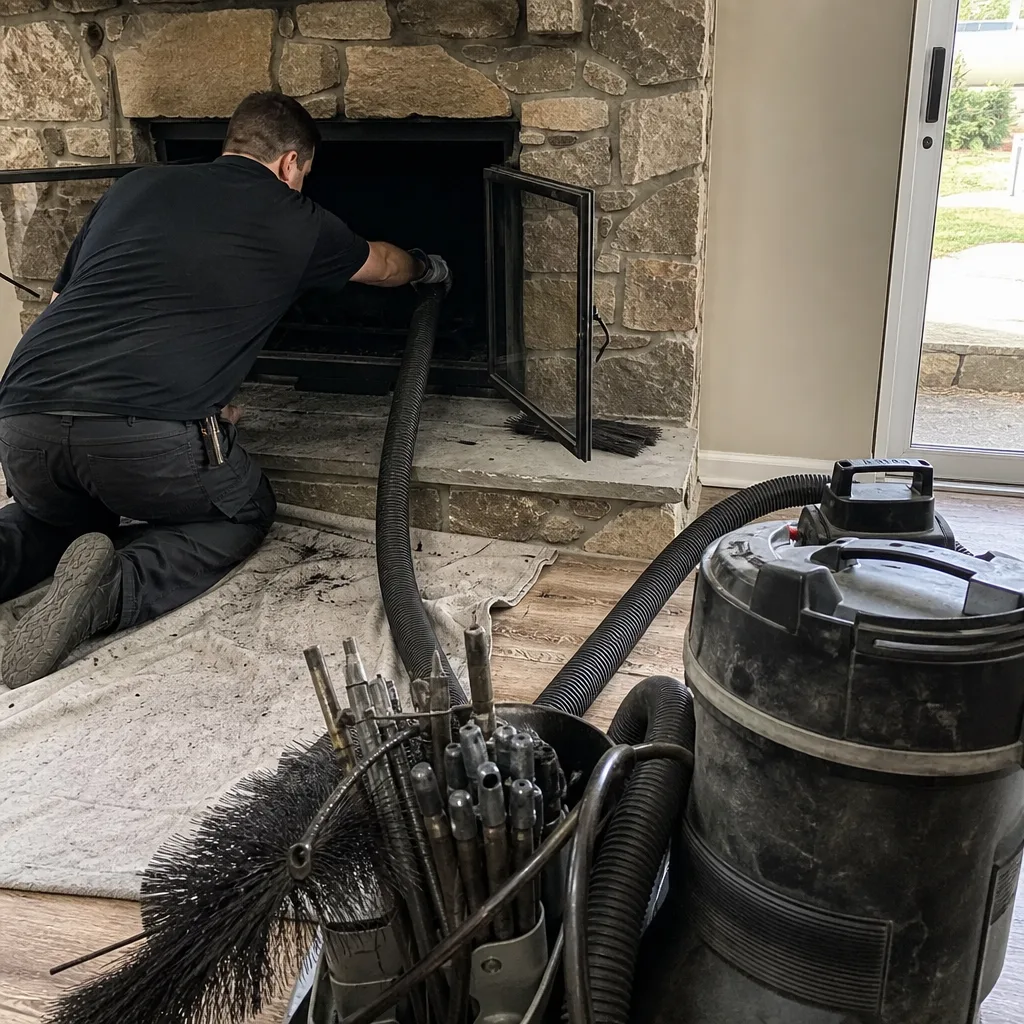 Before
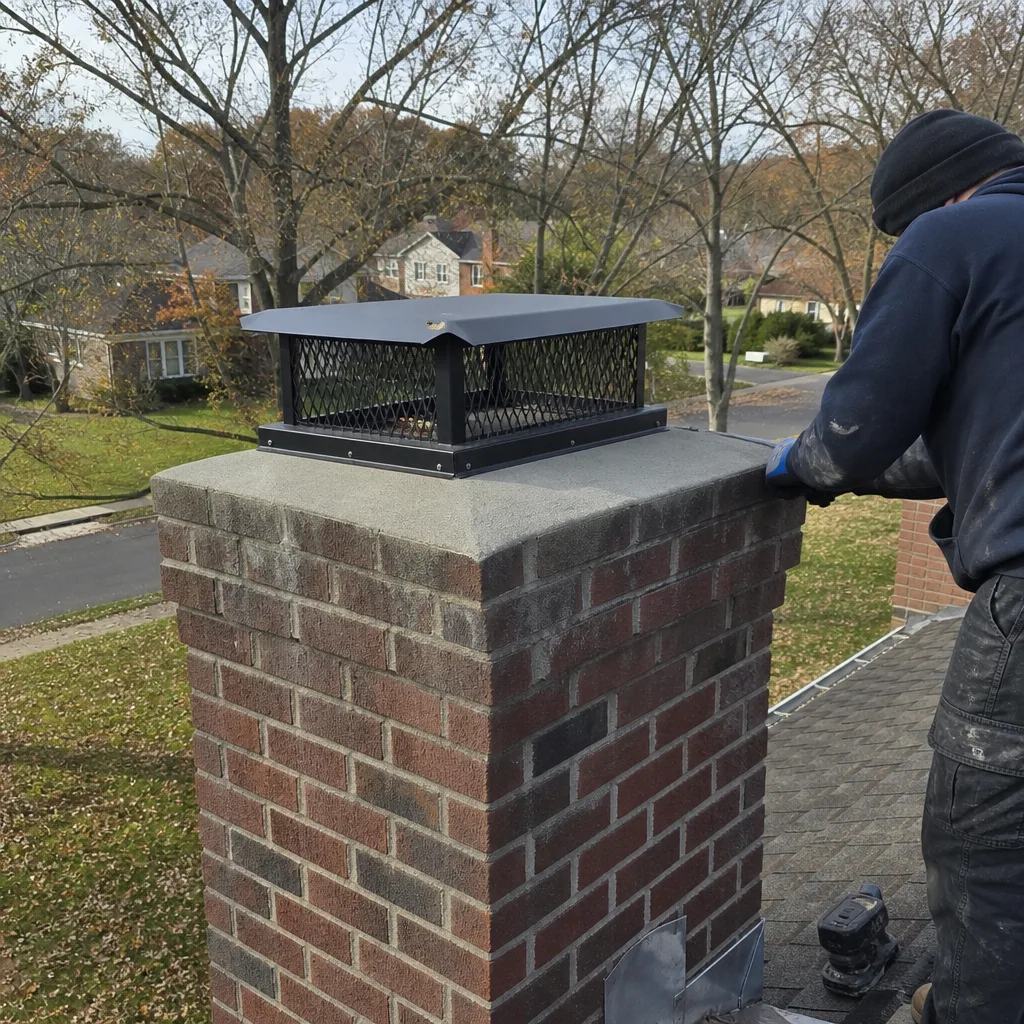 After
AfterChimney Cleaning Warning Signs: A Rockland County Homeowner’s Reference Guide
Most chimneys in Rockland County don’t fail suddenly. They fail slowly, in ways that are easy to explain away: a faint smell on humid days, a few spalled brick chips in the garden bed, a fire that just doesn’t draw like it used to. The homeowners who call us after a chimney fire are the ones who told themselves those little signs were normal. They usually weren’t. This guide covers the seven specific warning signs you can spot from inside your house, no ladder required, what the exterior stains actually mean, and how to know whether a problem is a “schedule it this spring” issue or a “don’t light another fire until this gets looked at” issue. For a deeper dive, see our Complete Guide to Chimney Cleaning in Rockland County.
Quick Answer
The clearest signs your chimney needs cleaning or inspection in Rockland County are a smoke smell when no fire has burned recently, a campfire-like odor in the house on humid days, visible dark oily deposits on the damper or firebox walls, difficulty getting a fire to catch or draw, a whistling or fluttering sound from the flue, animal activity sounds, and any white or brown staining appearing on the exterior chimney face. Of these, the non-burning smoke smell and visible oily glaze are the most serious because they point to third-degree creosote buildup, which is a chimney fire risk. The white staining (efflorescence) is usually a water issue, not a creosote issue, and it sits on a different urgency scale.
Table of Contents
- The Seven Warning Signs You Can Find From Inside the House
- Efflorescence, Spalling, and Staining: Reading the Outside of Your Chimney
- Why “Smoke Smell When Not Burning” Is Different From “Smoke Smell When Burning”
- Sound and Draft Clues: Animal Nesting vs. Creosote Buildup
- A Simple Severity Scale for Rockland County Homeowners
- How Rockland County’s Climate Accelerates Chimney Problems
- Common Mistakes to Avoid
- When to Call a Professional
- Frequently Asked Questions
- The Bottom Line
The Seven Warning Signs You Can Find From Inside the House
You don’t need a ladder, a flashlight, or a set of brushes to spot a chimney problem. In Rockland County, where most homes were built between 1950 and 1985, the telltale signs are usually visible from the living room, the hearth, or the basement. Here are the seven signs we tell every homeowner to watch for, in order of how frequently we see them on the job.
- A smoke odor that lingers more than a few hours after the fire is out. A little woodsmoke right after you’ve had a fire is normal. A smoke smell that’s still there the next morning, or that shows up when you haven’t burned in weeks, is not. It means the flue isn’t drafting the way it should, and that combustion byproducts are being pushed back into the living space instead of up and out.
- Black or dark brown flaky deposits on the damper, smoke shelf, or firebox walls. Open your damper, look up, and check for anything that looks like dried coffee grounds or flaking paint. First-degree creosote brushes out easily. Second-degree looks like crunchy granules. Third-degree looks like a hard, shiny glaze, and it will not come off with a brush. That glaze is the difference between a $250 sweep and a chimney fire waiting for the right overnight burn.
- A fire that is consistently hard to start, even with dry seasoned wood. If you’ve checked the wood, the damper is open, and the fire still struggles to catch or smokes into the room, the flue is probably restricted. In our experience around Rockland County, that restriction is usually one of three things: a creosote buildup, a bird or squirrel nest, or a partially collapsed flue tile.
- The damper won’t fully open or close, or the handle feels gritted. A damper that grinds when you operate it is telling you creosote has worked its way into the hinge and track. It also affects your draft. A damper that won’t seal properly lets warm house air escape up the flue all winter, which shows up on your heating bill whether you burn wood or not.
- A rust-colored streak or drip mark on the firebox walls or hearth floor. Water is getting in somewhere, and it’s carrying rust or creosote residue down with it. That moisture can come from a cracked crown, a failing cap, or condensation inside the flue when it cools. In older Rockland County chimneys with unlined clay flue tiles, this is often the first visible sign that the tile joints have failed.
- Soot or staining on the walls, ceiling, or mantel near the fireplace opening. That staining is evidence that smoke has been spilling into the room, not going up the flue. In some cases it’s a drafting problem from a blocked flue. In others, it’s a house that’s too tight for the fireplace to draw without a fresh-air intake. Either way, it deserves attention before it becomes a persistent indoor air quality problem.
- The whole room smells like a campground whenever it rains or gets humid. A chimney that absorbs moisture will re-release creosote odor into the house, and the smell is strongest on humid days. It’s a sign that water is saturating the masonry or the creosote deposits inside the flue. In Rockland County, where spring and fall bring weeks of damp weather, this is one of the most common calls we get from homeowners about a chimney they haven’t used in months.
Any one of these signs is worth a call. Two or more should move the issue up your priority list. We’ve been sweeping chimneys in Rockland County since 1999, and the pattern we see over and over is that homeowners wait until the chimney stops working entirely, which is always a more expensive fix than catching it early. For more on how we approach the actual cleaning, the Chimney Cleaning & Sweep in Rockland County page walks through the process step by step.
Efflorescence, Spalling, and Staining: Reading the Outside of Your Chimney
A white stain running down the outside of your chimney isn’t a cosmetic problem. It’s your masonry telling you water is moving through it in a direction it shouldn’t be. Rockland County brick is built to shed water quickly, and when it can’t, the brick and mortar start to break down from the inside.
There are three distinct exterior signs, and they each tell a different story:
- Efflorescence: the white, chalky, sometimes powdery stain. This is salt being pushed to the surface of the brick as water evaporates. Efflorescence by itself doesn’t mean imminent failure, but it means water is routinely getting into the masonry. If the stain is light and disappears in dry weather, keep an eye on it. If it’s heavy, persistent, or blooming in new places each season, the water entry point needs to be found and sealed.
- Spalling: the brick face is flaking, chipping, or you’re finding brick pieces in the yard. This is the more serious cousin of efflorescence. Water inside the brick freezes, expands, and pops the brick face off. You’ll see a chimney face that looks like someone took a chisel to it at random spots. Spalled brick is not a watch-and-see issue. Exposed brick below the surface absorbs water even faster, so the damage accelerates once it starts.
- Brown, rust-colored, or green staining. Brown or rust stains usually mean water is running off a metal component: a rusting damper assembly, a deteriorating cap, or a metal liner flashing. Green staining is almost always algae or moss growth, which tells you the chimney surface is staying damp long enough to support vegetation. That’s a water drainage issue, not a biology issue.
The urgency question matters. Efflorescence alone? Schedule an inspection when you can, and stop water entry before spalling begins. Spalling with exposed brick? Get a mason who works on chimneys specifically to look at it this season. Brown staining from the cap area? That can be a blocked-off chimney, which pushes combustion gases somewhere they shouldn’t go. In our experience, most exterior chimney issues in Rockland County trace back to one of three things: a cracked concrete crown, missing or damaged flashing where the chimney meets the roof, or a cap that’s rusted out. These are all fixable, and the Chimney Repair in Rockland County page covers what’s involved.
Why “Smoke Smell When Not Burning” Is Different From “Smoke Smell When Burning”
Your flue doesn’t care how the fire looks. It cares how it breathes. And the timing of a smoke smell tells you exactly what kind of problem you’re dealing with. This is one of the most useful diagnostics in the business, and it’s one you can do yourself without touching the chimney.
Smoke smell when you ARE burning: This is a drafting problem. The smoke is being pushed back into the room instead of up the chimney. The usual culprits are a flue that’s partially blocked by creosote or debris, a fireplace that’s competing with other exhaust appliances (bathroom fans, range hoods, the furnace), or a chimney that’s simply too short to pull an adequate draft on certain wind days. It can also happen when the house is too tightly sealed, and the fire can’t get the makeup air it needs. The fix depends on the cause. A blocked flue needs a sweep. A draft problem may need a taller flue, a cap change, or an air intake.
Smoke smell when you’re NOT burning: This is a whole different animal, and it’s the one we’d always rather you not ignore. When a chimney absorbs moisture, it releases creosote odor back into the house, usually through the damper or the firebox. The smell is strongest on humid days. If you’re getting that smell with no fire, water is working its way into the masonry or the creosote deposits inside the flue are saturated. Either way, the chimney needs an inspection and almost certainly a cleaning. A third-degree creosote glaze that’s been absorbing moisture is carrying a chimney fire risk, and it’s often the thing that finally forces a homeowner to pick up the phone after months of “it only happens when it rains.”
One more point worth making: if the smell is musty rather than smoky, and it comes and goes with the weather, you may be smelling water-damaged masonry or a soiled insulation layer around the flue. The fix for that is not a sweep. It’s a repair. A camera inspection will show the difference, and it’s the only way to be sure without opening walls.
Sound and Draft Clues: Animal Nesting vs. Creosote Buildup
Two chimneys can produce an identical symptom and need completely different fixes. That’s why we never diagnose over the phone without looking. But there are clues that point one direction or the other, and a homeowner who knows them can have a more useful conversation when they call.
Animal nesting and creosote buildup both restrict airflow and make a fire draw poorly. But they sound and feel different:
- Animal activity: You’ll hear scratching, chirping, or fluttering at irregular times, usually around dawn and dusk. Squirrels are daytime. Raccoons are nocturnal. Birds will come and go, and you may see nesting material in the firebox or sticking out of the damper. The draft will be affected only when the nest has gotten large enough or has fallen partially into the flue. A chimney cap with damaged or missing screening is the entry point in almost every case.
- Creosote buildup: It doesn’t make noise on its own. The sound is usually the draft itself: a whistling or a rushing, fluttering sound when the wind blows or when a fire is burning. That sound is air being squeezed past a restriction. You may also notice that the fire roars one minute and nearly dies the next, or that smoke rolls into the room when you open the fireplace doors. The draft problem comes from the narrowing flue, and it gets worse as the season progresses.
- The draft test: On a cool day, open the damper and hold a lit match or a piece of incense near the fireplace opening. If the smoke drifts up into the flue, the draft is working. If it billows back into the room, the flue is blocked or the chimney is fighting another exhaust appliance. This test won’t tell you exactly what’s wrong, but it will confirm whether air is moving the way it should.
The different fixes matter. An animal nest needs to be removed, the chimney swept, and the entry point sealed with a proper cap and screening. A creosote problem needs a sweep, and potentially a different burning practice. We’ve pulled raccoons, squirrels, and more bird nests than we can count out of Rockland County chimneys, and the thing they all had in common was a missing or rusted-out cap. The fix is usually one trip.
A Simple Severity Scale for Rockland County Homeowners
Every chimney warning sign falls into one of three categories. The categories matter because they change what you should do next. Here’s the scale we use when a homeowner calls us describing what they’re seeing:
- Schedule it when you can (within a month or two). Light efflorescence that appears and fades, a faint smoke smell right after a fire that disappears by morning, a damper that works but feels slightly gritty, or an animal you’ve seen near the chimney but haven’t confirmed is inside. These are early-warning signs. They warrant a sweep or inspection, but there’s no immediate danger. Book it in the next month or two, ideally before burning season gets heavy.
- Schedule it this week. Persistent efflorescence that’s growing, brown or rust-colored staining around the cap or flashing, a smoke smell that appears when you’re not burning, a chimney that won’t draw properly on multiple attempts, or confirmed animal sounds coming from the flue. These are active problems that get worse with weather. They’re not emergencies in the fire-danger sense, but they should not wait a whole season. The nice thing about the current pricing structure: most chimney sweeps in Rockland County are busiest in the fall, which means spring and summer calls get scheduled faster.
- Don’t light another fire. A shiny, tar-like glaze visible inside the flue, a smoke smell that’s so persistent you’ve stopped using the fireplace entirely, spalled brick with exposed inner surfaces, or any sign that fire has been where it shouldn’t be (discolored walls near the chimney chase, smoke stains, a burned smell that never goes away). Third-degree creosote becomes combustible creosote, and the next fire could be the one that ignites it. Call us at (845) 599-0832. We’ll tell you honestly what we find and what it costs to fix, with no pressure.
This scale matters because most chimney companies won’t give you one. They’ll tell you everything is an emergency, or nothing is urgent enough to bother with. We’d rather you know what you’re looking at. Wendell has been in more Rockland County chimneys than he can count, and most of them didn’t need a dramatic intervention. They needed a sweep, a cap, or a crown repair. The trick is knowing which, and how soon.
How Rockland County’s Climate Accelerates Chimney Problems
Chimneys break faster here than they do in drier parts of the country, and the reason is simple: our weather. Rockland County gets real winters with freeze-thaw cycles, humid summers, and enough rain that a minor water entry point becomes a major one in three seasons.
The freeze-thaw cycle is the biggest factor. When water works into brick pores or mortar joints and then freezes, it expands by about 9 percent. That expansion pushes tiny cracks open wider. When the ice melts, more water gets in, and the next freeze does more damage. A hairline crack in a crown that would be cosmetic in Arizona is a spalling problem in New City or Suffern after two winters. That’s not a theoretical observation. We’ve swept brick chimneys throughout Rockland County for over 29 years, and the ones that get cleaned and inspected regularly simply last longer. The ones that don’t end up needing a rebuild sooner.
Humidity plays a role too. The summer months put moisture into the masonry, and when fall comes and you light the first fire, that moisture gets driven out through the flue as steam. If there’s creosote present, the steam loosens it and carries creosote odor through the house. That’s why so many homeowners in Rockland County call us in October, right after the first fire of the season, complaining about a smell. The smell was always there. The fire just activated it.
For most of our customers, the right rhythm is one sweep a year, burn or no burn. Chimneys break in the off-season too, and the cracks don’t care whether you used the fireplace. If anything, a dormant chimney is the one that hides a problem until the next fire makes it obvious. The Fireplace Services in Rockland County page covers the annual maintenance sequence we recommend, along with the repairs that can wait and the ones that can’t.
Common Mistakes to Avoid
- Assuming no fires means no problems. A chimney that sits unused still absorbs water, still hosts animals, and still collects whatever the wind deposits. We’ve found raccoon nests in chimneys attached to fireplaces that hadn’t been used in three years. The flue doesn’t know you’re on a break.
- Burning unseasoned wood to “save money.” Wet or green wood burns cooler and produces more smoke, which condenses into creosote faster than seasoned hardwood. The money you save on a cord of cheap wood gets spent on a more frequent sweep and, eventually, a more expensive one. Use wood that’s been split and stacked for at least a year.
- Relying on a chimney-cleaning log. Those logs loosen first-degree creosote, and they can help a little between cleanings. They will not remove a third-degree glaze, they will not clear an animal nest, and they will not tell you whether your flue tiles have failed. They’re a supplement, not a substitute.
- Waiting until fall to schedule a sweep. Every chimney company in Rockland County books up in September and October. A spring or summer sweep is the same service, usually scheduled within a week, and it means you’re ready when the first cold night hits. It also means you don’t spend a winter burning in a chimney you haven’t seen cleaned.
- Assuming a white stain is just “what brick does.” Efflorescence is common, but it’s a symptom, not a feature. If you’re seeing it on your chimney and not on your neighbor’s identical chimney, something about your water exposure is different, and that something is worth finding. Once the brick starts spalling, the repair bill triples.
- Trusting a quote given sight unseen. A phone estimate without a video inspection is a guess. The number you hear on the phone should be the number on the invoice, which means the person giving you the quote should have looked at the chimney first. At Top Hat Chimney, we give our pricing before work starts, and we show you what we saw, because you have a right to verify what you’re paying for.
When to Call a Professional
Call when you see any of the seven signs from the top of this guide and you don’t know what they mean. Call when you’ve lived in the house more than two years and you’re not sure the chimney has ever been inspected. Call when you find brick pieces in the yard. Call when the smoke smell shows up on a humid day in July and you haven’t burned since March. This is not a problem that resolves itself, and the longer it waits, the more it costs.
And if someone has given you a written estimate that feels high or doesn’t quite make sense, get a second set of eyes. Top Hat Chimney offers free estimates in Rockland County, and a free second opinion on any competing written estimate. Wendell has been doing this since 1999, and he’ll tell you what you actually need and what can wait. Call (845) 599-0832. A live person answers, any time, day or night.
Frequently Asked Questions
Once a year, burn or no burn. The National Fire Protection Association recommends an annual inspection and cleaning as needed, and in Rockland County, where our freeze-thaw cycles and humidity accelerate masonry wear, an annual look is the minimum. A household that burns more than three cords a season may need a mid-season sweep. Call (845) 599-0832 and we’ll help you set the right rhythm for your fireplace and your burning habits.
A standard chimney sweep in Rockland County typically runs between $200 and $350, depending on the level of creosote, the height and access to the chimney, and whether animals need to be removed. Homes with years of accumulated creosote or a deteriorated flue liner will be on the higher end of that range or beyond. Top Hat Chimney gives upfront pricing before any work begins, and the number we quote is the number on the invoice. Call (845) 599-0832 for an exact quote.
A sweep removes the creosote, soot, and debris from the flue. An inspection evaluates the condition of the flue liner, the masonry, the cap, the crown, and the flashing to identify structural issues. We do both. A sweep includes a visual inspection of what we can see, and when we have any doubt about what’s going on deeper in the flue, we show you the camera footage and a plain-English verdict, every time, no exceptions.
Sometimes yes, sometimes no. A liner needs replacement when the existing clay tiles have cracked, separated, or spalled to the point that combustion gases can escape into the house framing, or when the liner is sized incorrectly for the appliance. The only honest way to know is to look. We use camera inspections, and we’ll show you exactly what we see. If the liner is fine, we’ll tell you it’s fine. We don’t recommend liners on a hunch, and we work with trusted industry brands like DuraFlex and HeatShield when replacement is genuinely required.
Rain or humidity saturates the creosote inside the flue and the masonry around it, and the moisture carries the creosote odor back through the damper into the house. This is one of the most common warning signs we see in Rockland County, and it means water is getting into the chimney. A sweep removes the creosote, and a camera inspection finds the water entry point, which is usually a cracked crown, failed flashing, or a missing cap. Call (845) 599-0832 before it becomes a spalling problem.
Yes. A quiet chimney fire can burn hot and fast inside the flue, especially with third-degree creosote present, and the homeowner may only notice a loud rushing sound, a smell like hot tar, or nothing at all. The damage shows up later as cracked flue tiles, warped dampers, or discolored masonry. If you’ve had any of those symptoms and haven’t had the chimney checked, don’t light another fire until you do. Top Hat Chimney offers free estimates in Rockland County.
We install and service chimney caps, repair and rebuild crowns, and replace or repoint masonry, and we work with trusted industry brands like Copperfield, Gelco, and Olympia Chimney. A properly installed cap keeps water and animals out, which prevents most of the problems in this guide. The Chimney Repair in Rockland County page details the full repair scope, and we’re always glad to give a free estimate at (845) 599-0832.
The Bottom Line
Most chimney problems announce themselves. The issue is that the warning signs don’t look like what people expect: a white stain that looks like a cosmetic blemish, a smell that only shows up when it rains, a fire that’s just “a little harder to get going.” Each of those is a real signal. In Rockland County, where the weather works against masonry year-round, an annual sweep and inspection is the cheapest insurance you can buy against a liner rebuild or a chimney fire. If you see something that doesn’t seem right, call (845) 599-0832 or browse our more guides & resources to learn what to watch for. We’ll give you an honest look and a straight answer, and we’ll never sell you a repair you don’t need.
Written by Wendell Pike, Owner at Top Hat Chimney, serving Rockland County since 1999.