
Last updated September 10, 2026
Level 1 sweep and inspection to the NFPA 211 annual standard - flue, crown, cap, and flashing checked and photographed
Chimney sweep logs do not sweep chimneys. They loosen some creosote - which then falls where a brush and vacuum still have to collect it.
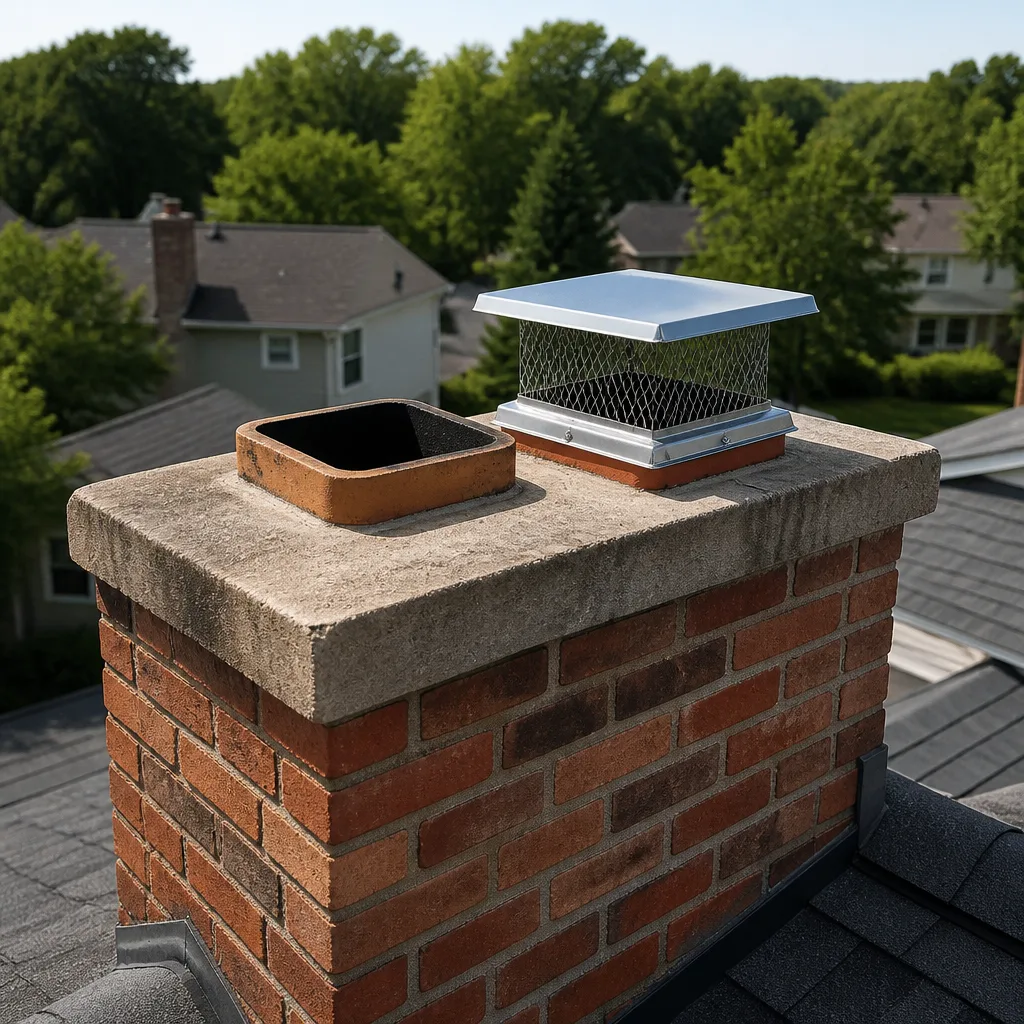
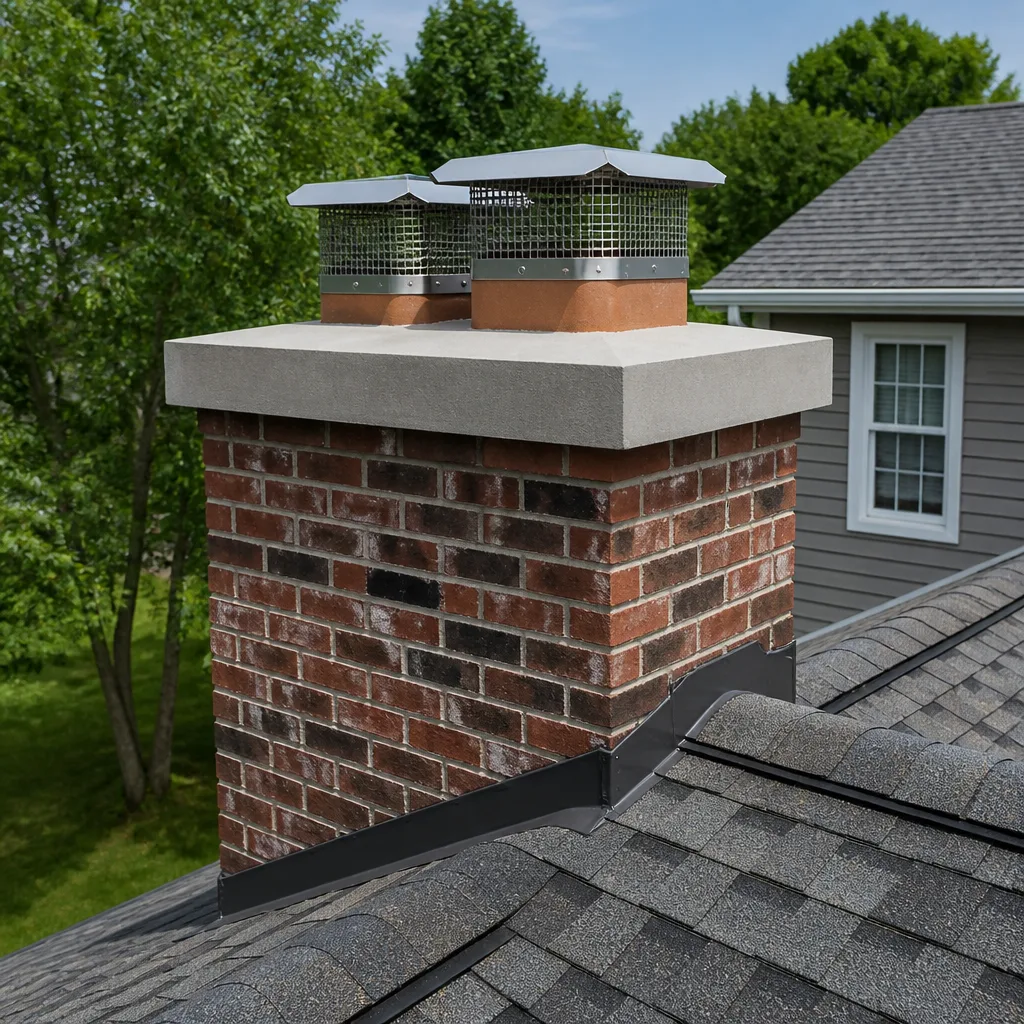
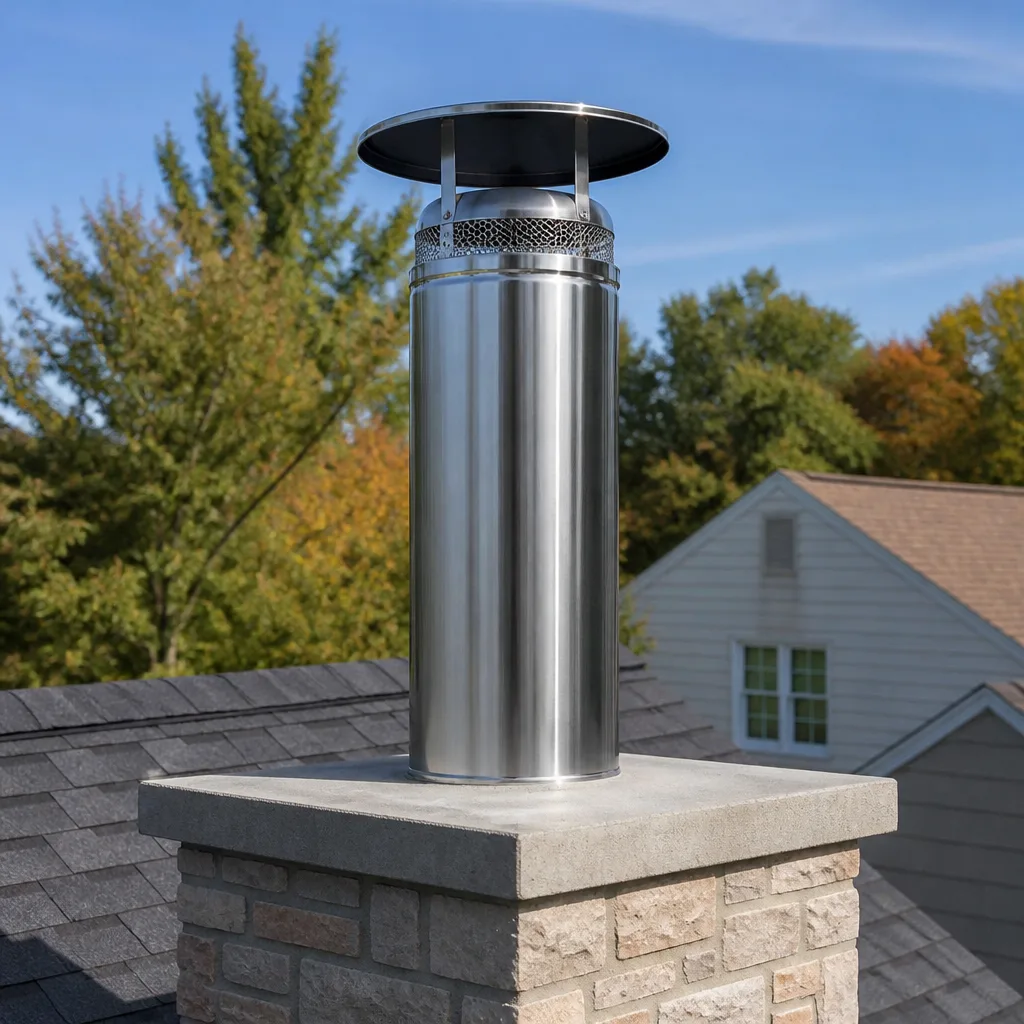
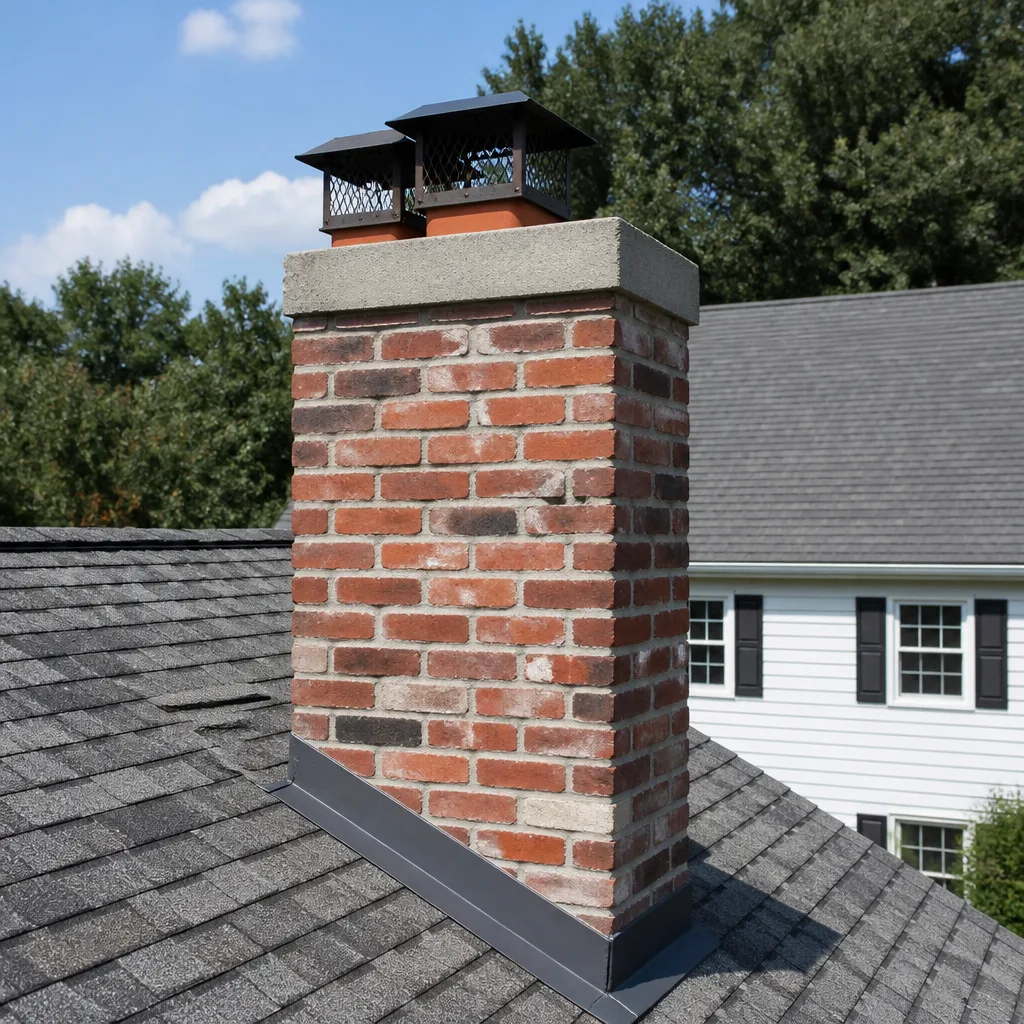
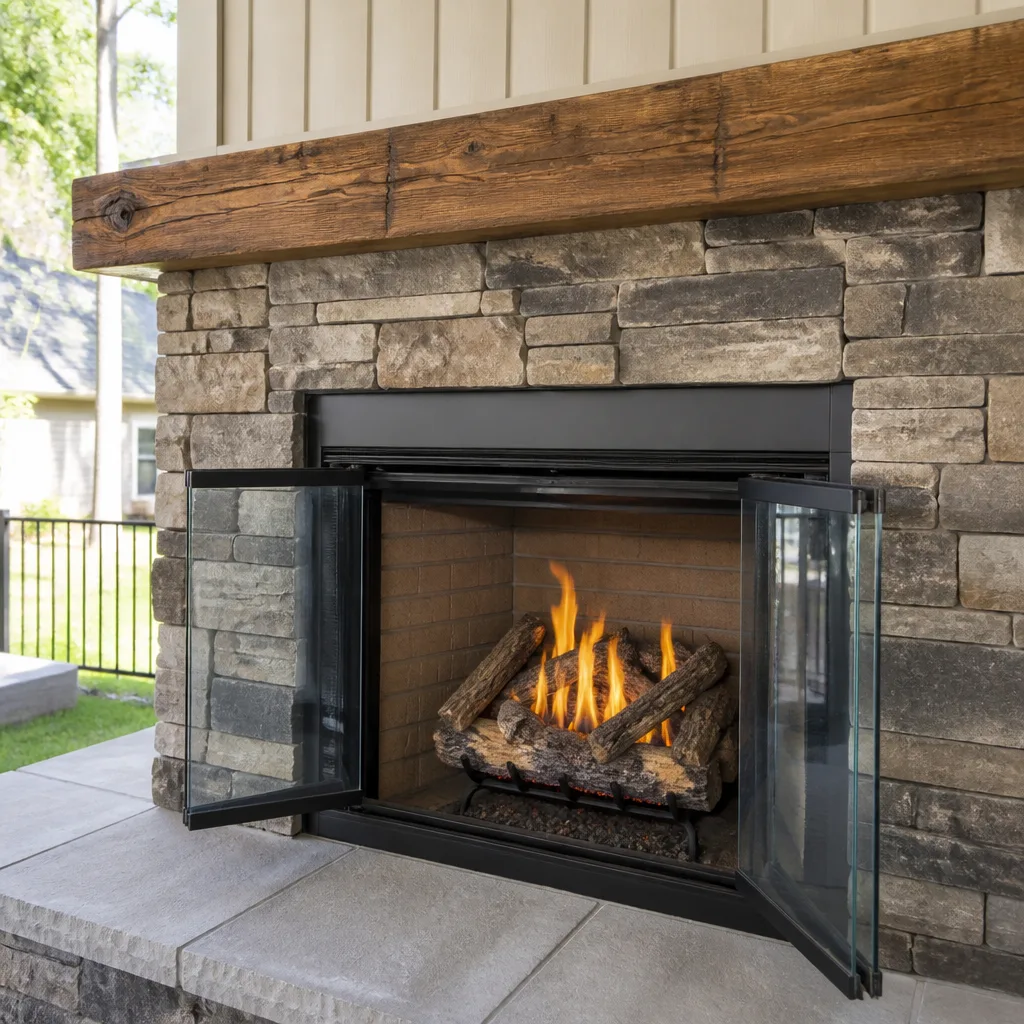
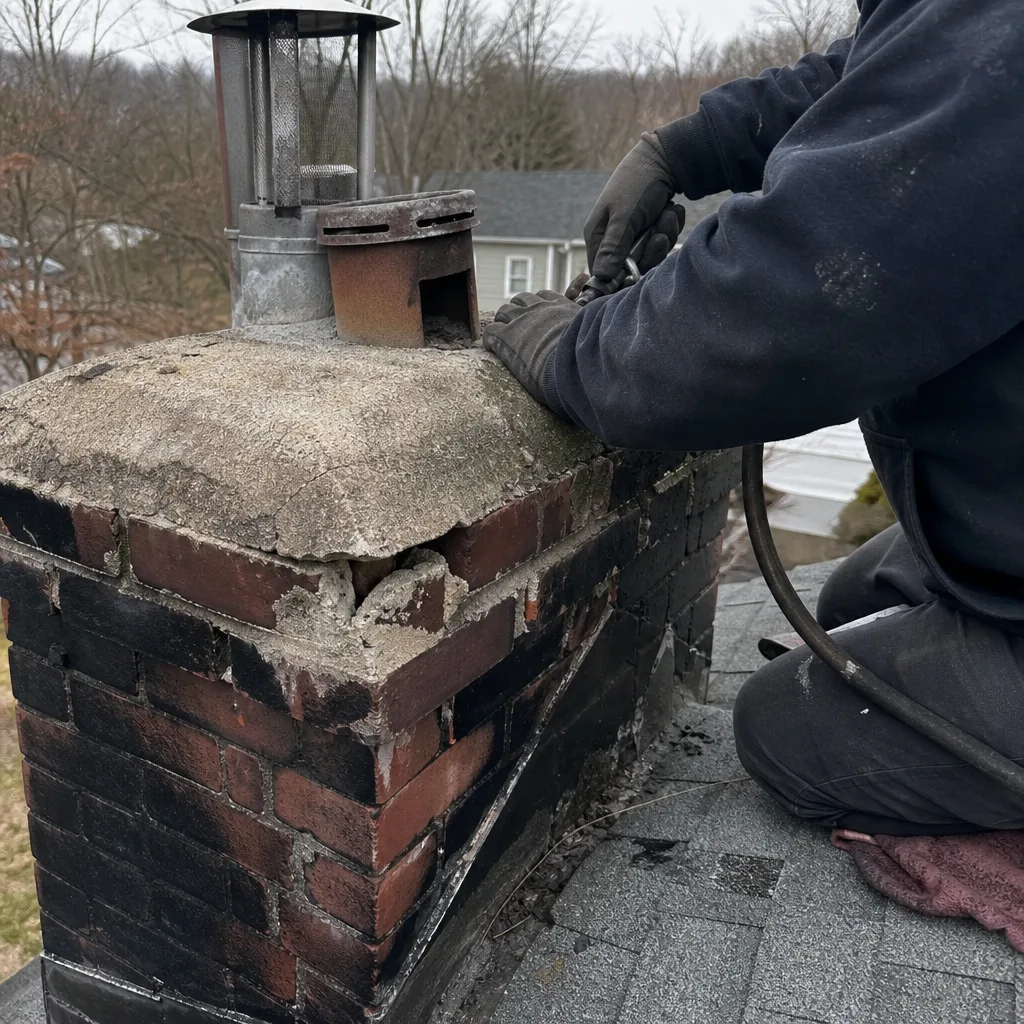 Before
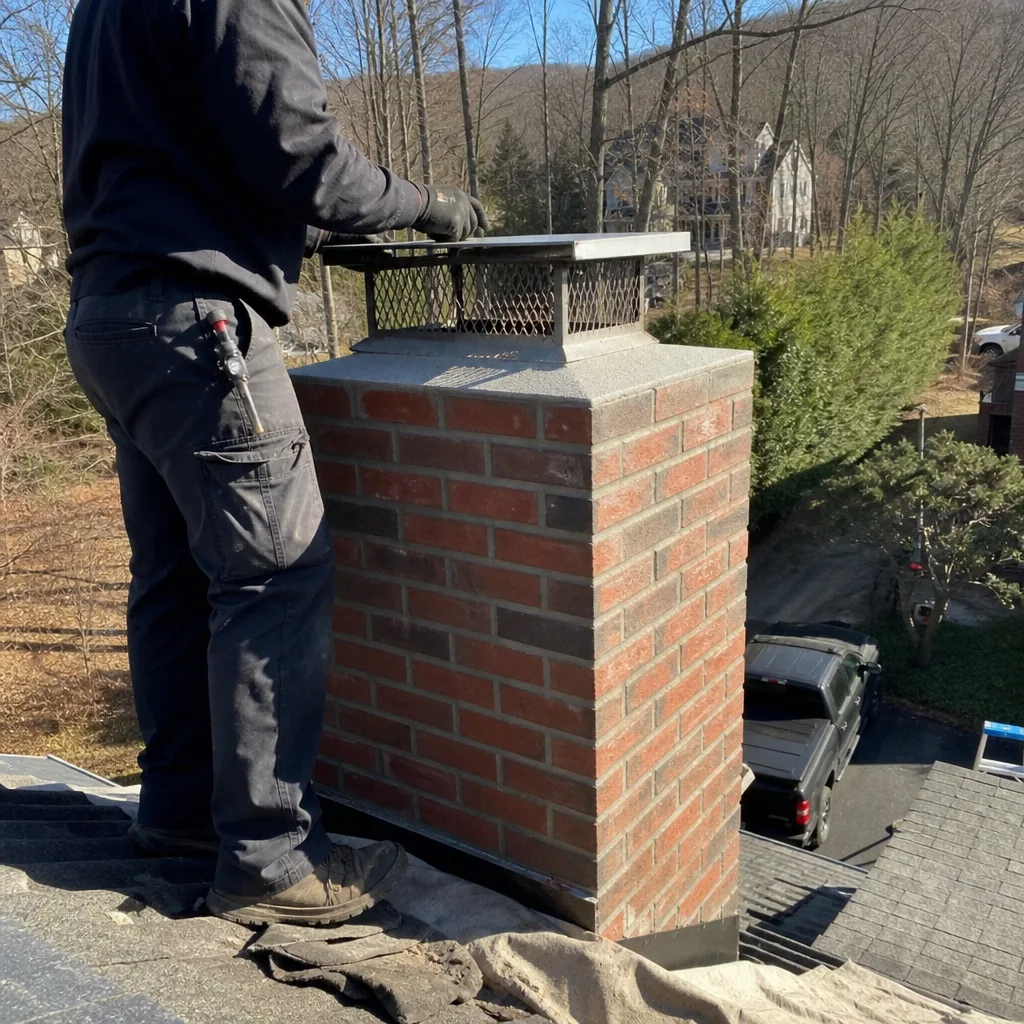 After
After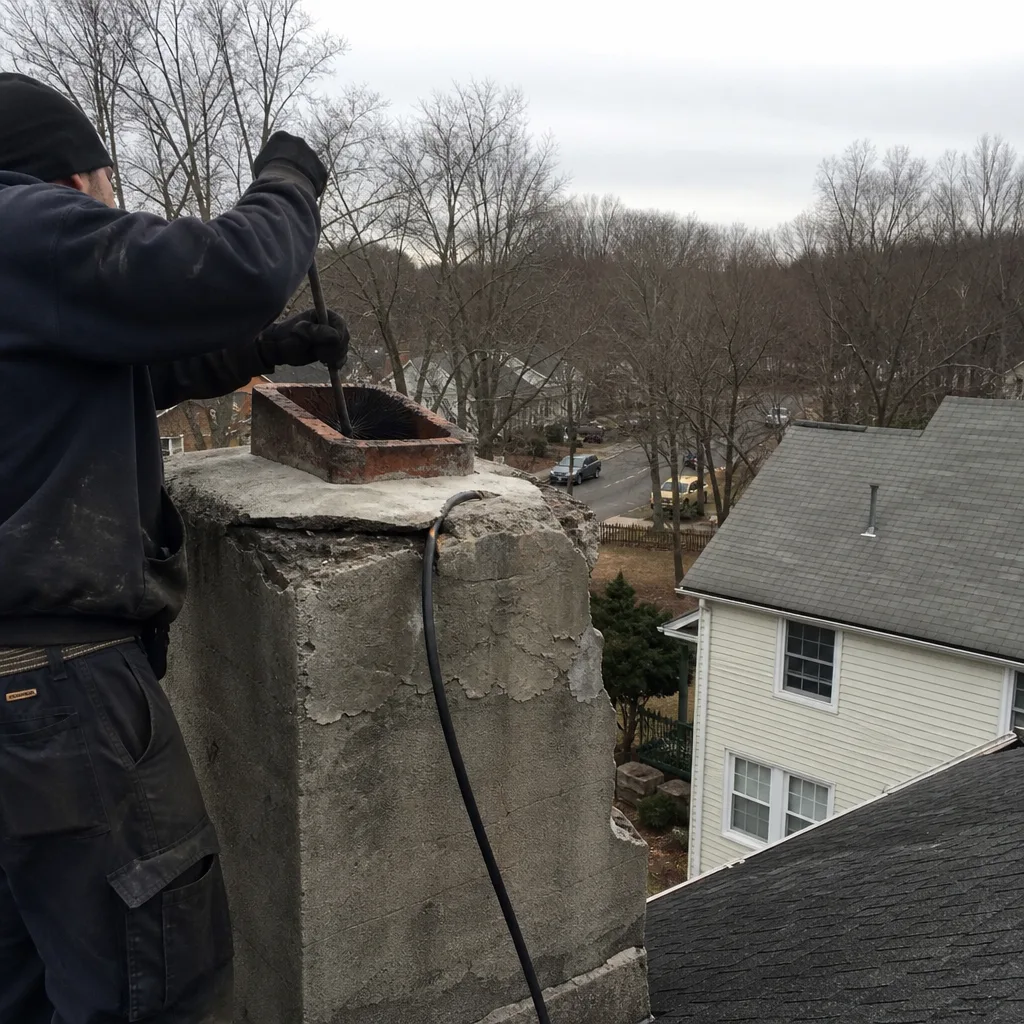 Before
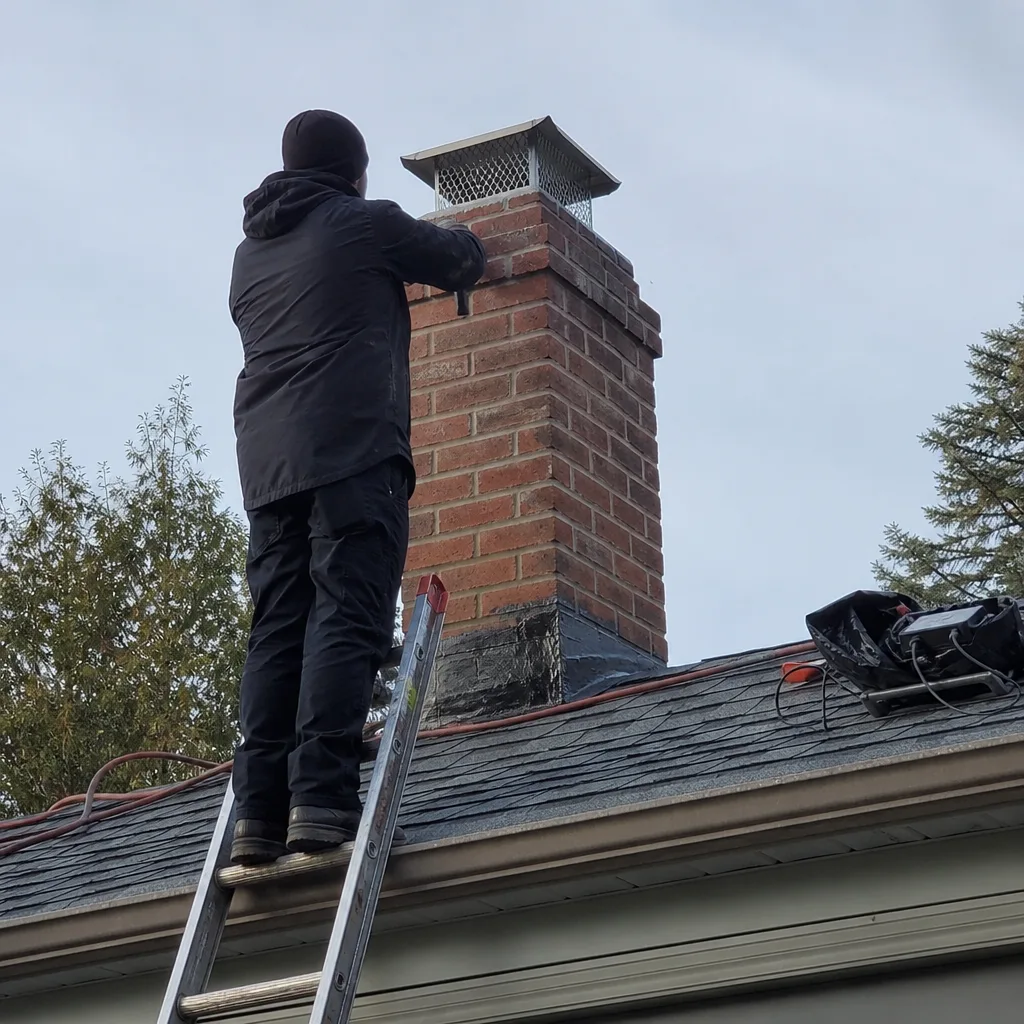 After
After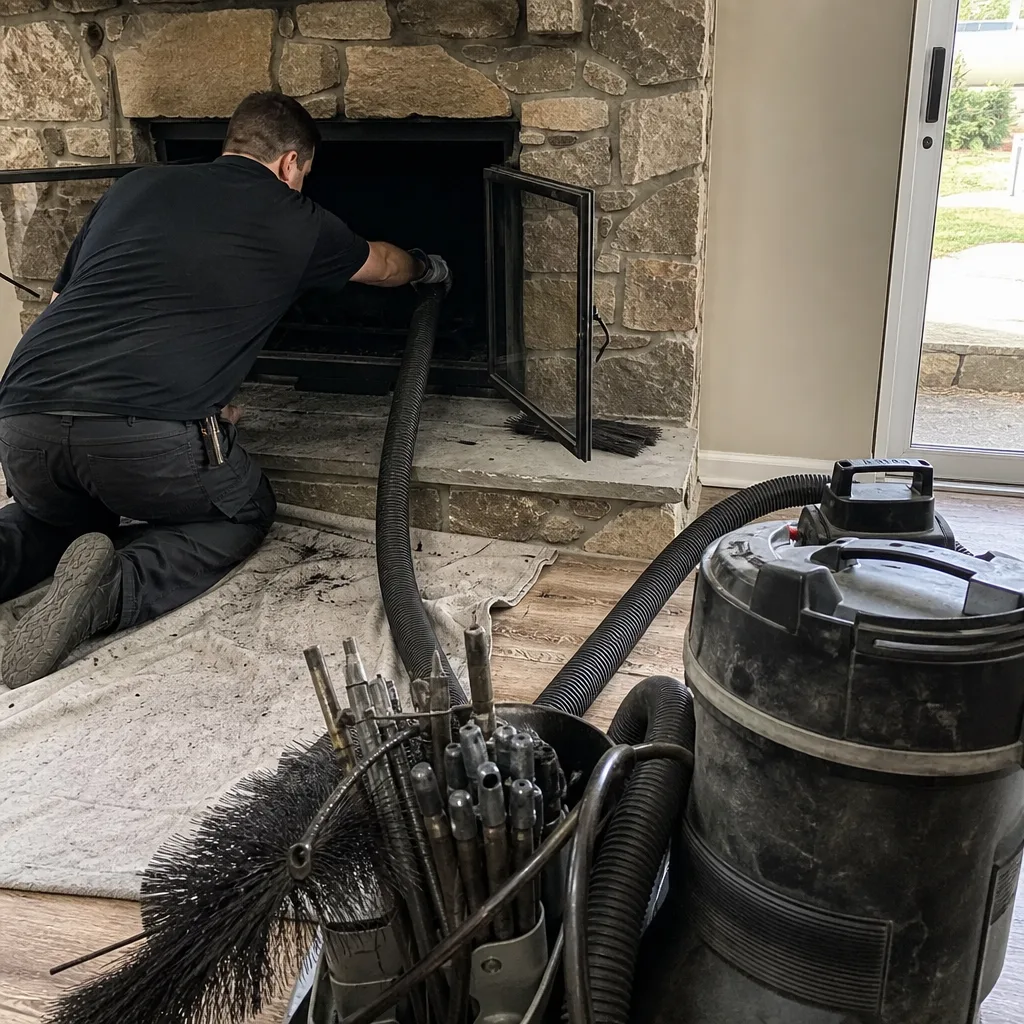 Before
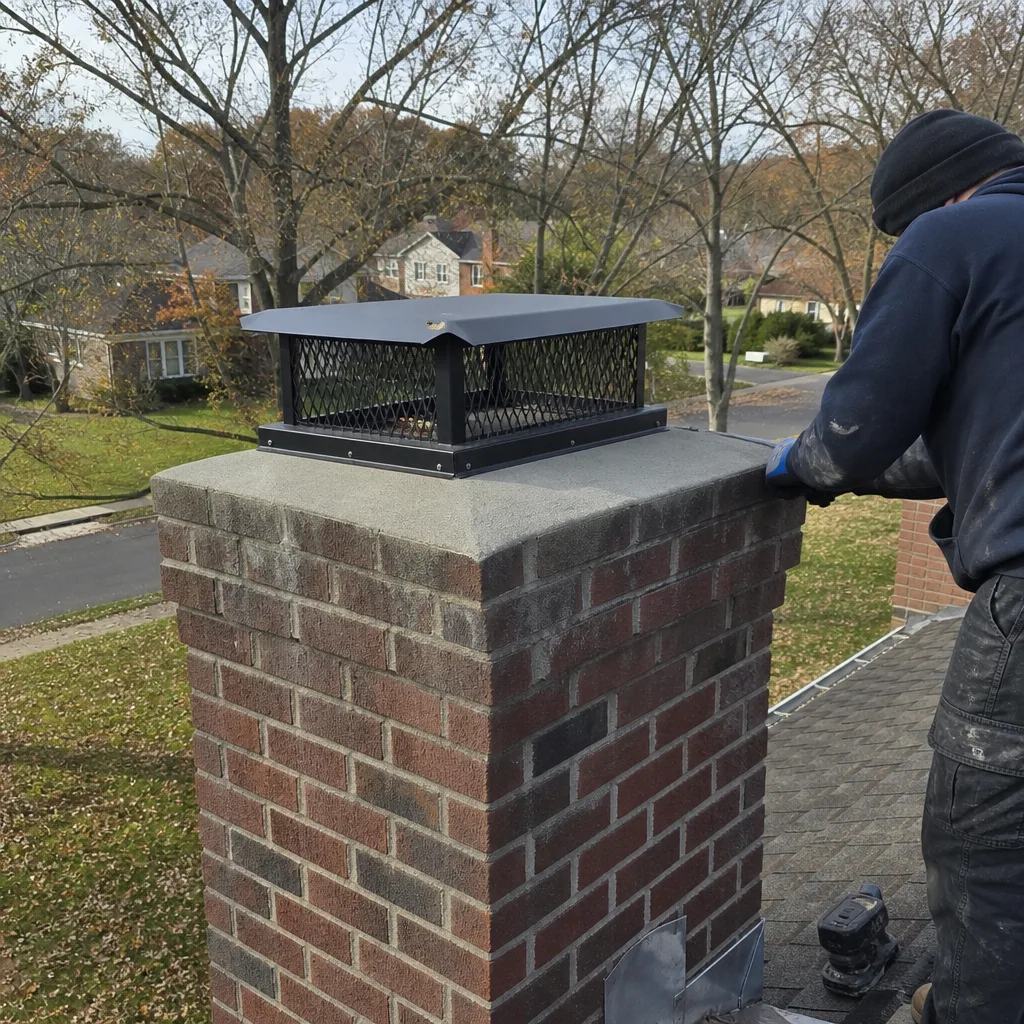 After
AfterDIY vs Professional Chimney Cleaning: The Rockland County Homeowner’s Decision Guide
Here’s something most chimney guides won’t tell you upfront: a homeowner with a $40 brush kit and a Saturday afternoon can remove loose creosote from an open fireplace flue in Rockland County, and the chimney will be cleaner for it. What that homeowner cannot do is see the hairline crack running up the terra cotta liner behind the damper, measure the spalled mortar joints in the firebox, or spot the early-stage glaze forming where the flue makes its bend. That is the actual decision before you. Not whether you can clean a chimney, but whether you know what you’re looking at while you do. This guide walks through both paths honestly, with Rockland County specifics, real costs, and the situations where calling a sweep is not a luxury but the only responsible choice.
Quick Answer
DIY chimney cleaning can be appropriate for a homeowner who burns only seasoned wood in an open fireplace with light, first-degree creosote, and who is willing to get on the roof safely with the right brush. A professional sweep in Rockland County earns the cost by doing what a rod-and-brush cannot: a camera inspection of the full flue, an assessment of liner, crown, cap, and firebox condition, and a written record that matters if you ever file an insurance claim. If you burn regularly, have a wood stove or insert, see glossy or tar-like creosote, or haven’t had an inspection in over a year, hire the professional.
Table of Contents
- What DIY Actually Does (and What It Doesn’t)
- When DIY Is a Reasonable Choice
- What a Professional Sees That You Can’t
- The Insurance and Liability Reality
- The Real Cost Comparison: DIY vs Professional
- The Middle Path: What to Maintain Yourself
- Common Mistakes to Avoid
- When to Call a Professional
- Frequently Asked Questions
- The Bottom Line
What DIY Actually Does (and What It Doesn’t)
Before you decide anything, understand the mechanical truth of the job. A chimney brush on a flexible rod scrubs the flue walls. It removes creosote that has already built up. It does not prevent the next buildup, does not repair a compromised liner, does not reseal a failing crown, and does not document anything for your records. That last point matters more than most homeowners in Rockland County realize until a claim is involved.
Creosote comes in degrees, and the degree changes what a brush can accomplish:
- First-degree creosote is the flaky, soot-like deposit you can wipe with a finger. A brush handles this well. This is the only stage where DIY cleaning makes practical sense.
- Second-degree creosote is the shiny, hard, crusted layer that forms when fires burn cooler or when softwood dominates. A homeowner brush will polish the surface but not remove the deposit. This is where professional tools with mechanical or chemical assistance begin to matter.
- Third-degree creosote is the thick, tar-like glaze that looks like a coating of obsidian inside the flue. No homeowner brush touches it. This is a chimney fire waiting for spark. In Rockland County, where winter burning runs November through March and many homes burn every evening, third-degree glaze is more common than homeowners want to believe.
Your flue doesn’t care how the fire looks. It cares how it breathes. A fire that looks beautiful can be condensing creosote onto a flue wall that is already narrowing. A brush kit won’t tell you the flue has narrowed by 30 percent since last year. A trained eye will.
When DIY Is a Reasonable Choice
We’re not going to tell you DIY is always wrong, because it isn’t. It would be dishonest to suggest every homeowner in every situation needs a professional visit, and dishonesty has a way of catching up with a business eventually. There are specific conditions where cleaning your own chimney is a reasonable, even sensible, choice. That said, we’ve been inside enough chimneys across Rockland County since 1999 to know the conditions are narrower than the hardware store would have you believe.
DIY cleaning is genuinely appropriate when all of the following are true:
- You burn only seasoned hardwood in an open fireplace. Seasoned oak or maple burns hot and clean, producing far less creosote than softwood or green wood. If you’re disciplined about wood, your creosote load is inherently light.
- You burn occasionally, not nightly. Weekend fires or a few evening fires a month produce buildup that a spring or fall brushing can handle. Nightly winter burning in Rockland County produces buildup that compounds fast.
- Your last professional inspection (within 12 months) was clean. This is the biggest qualifier. If a licensed sweep camera-scoped your flue recently and found nothing abnormal, then your self-clean is a maintenance task, not a diagnostic one. You know what’s underneath because someone already looked.
- Your roof is low-pitched and safely accessible. In Rockland County, many homes have moderate roof pitches, especially older colonials and capes in Nyack, New City, and Stony Point. If you can walk your roof without risk and manage a brush rod comfortably, that’s one barrier removed.
- You’re inspecting with intent, not just brushing. You can look at your cap with binoculars from the ground. You can check the firebox for cracked mortar, the damper for smooth operation, and the smoke shelf for debris with a flashlight. You’re not just sending a brush up a hole.
If all five of these apply, DIY cleaning is defensible. If any two are questionable, the arithmetic changes.
What a Professional Sees That You Can’t
The honest case for a professional sweep is not that we run a brush more effectively than you can. The honest case is observation. Every day on the job in Rockland County, we find problems in chimneys whose owners thought everything was fine because the fire drew well and the smoke went up.
Here is what a trained sweep sees that a homeowner physically cannot, regardless of diligence:
- The full liner interior. We send a camera down the entire flue length, top to bottom. Hairline cracks in terra cotta liners are invisible to a brush and often invisible to a flashlight from the roof. In Rockland County, where freeze-thaw cycles stress masonry every winter, liner cracks are common in chimneys over 20 years old.
- The clay tile alignment. Tiles can shift. A shifted tile creates a gap where combustion byproducts can escape the flue before reaching daylight. This requires a camera to confirm.
- The crown and cap condition. From the ground, a crown looks intact. Up close, we see the hairline cracks that let water in, the spalling that accelerates every winter, the cap screens that have rusted through. Water damage, not fire, is what kills most chimneys in Rockland County over time.
- The firebox mortar joints. Mortar wears at different rates depending on heat, wood type, and chimney construction. Joints that look okay from the hearth can be three seasons from letting heat through to framing. A masonry eye sees the difference.
- The smoke shelf and throat area. This is where creosote and debris accumulate fastest, and it’s the hardest area for a homeowner to reach. A professional knows how to inspect it and clean it without pushing debris into the house.
- The damper seal. A damper that doesn’t seal fully wastes heat all winter and can let smoke drift into the room during a fire. Homeowners often assume a slightly leaky damper is normal. It isn’t.
The camera footage and a plain-English verdict, every time, no exceptions. That’s the standard we work to at Top Hat Chimney, and it’s the reason a professional visit produces something no DIY session can: evidence. You see what we see, on a screen, before any repair is recommended. Nothing is recommended without footage you can verify for yourself, and we’ll tell you plainly when work can safely wait.
The Insurance and Liability Reality
This is the section most DIY guides skip, and it’s the one that matters most if something goes wrong. Rockland County homeowners carry property insurance with specific expectations around chimney maintenance. Here is what actually happens when a chimney fire occurs and an adjuster starts asking questions.
If you file a claim for chimney fire damage after self-cleaning, the insurance company will ask for maintenance records. Most policies require reasonable maintenance, and most adjusters interpret that as professional inspection and cleaning on a regular cadence. A homeowner who says “I clean it myself every fall” has no documentation to back that up. No receipt, no report, no third-party verification. The claim does not automatically get denied, but the burden of proof shifts to you, and that is not where you want to be when the adjuster is deciding whether to pay for a new liner or a new roof.
If a licensed, insured sweep performed the last cleaning and provided a written report, you have evidence. The report establishes that the chimney was maintained. It also documents the condition at the time of the last visit, which can help localize when a problem started. Insurance carriers deal with documented maintenance far more favorably than with self-reported maintenance. This is not a scare tactic; it is the administrative reality of claims in Rockland County and everywhere else.
There is also the matter of code. Rockland County enforces the New York State Fire Prevention Code, which incorporates NFPA 211 standards for chimneys and fireplaces. NFPA 211 sets the standard of care for chimney maintenance. When a professional sweep performs work, we’re working to that standard. When you DIY, you are assuming the role of the responsible party without the training, the documentation, or the standing to point to a recognized standard if questioned. That may never matter. It will matter exactly once if the fire department responds to your chimney fire and writes a report.
The Real Cost Comparison: DIY vs Professional
The easy version of the cost conversation goes like this: DIY costs $50 for equipment, a professional costs $200 to $350, therefore DIY saves money. The easy version is wrong. Here is the actual math in Rockland County.
| Item | DIY Cost | Professional Cost |
|---|---|---|
| Chimney brush kit (rods, brush, drop cloth) | $45 – $90 | Included in service |
| Safety gear (dust mask, goggles, gloves) | $20 – $40 | Included in service |
| Ladder if none owned (rental) | $35 – $60/day | Not needed by homeowner |
| Cleaning service itself | $0 (your labor) | $175 – $325 typical in Rockland County |
| Camera inspection of flue | Not available | Included |
| Written report for insurance | None | Included |
| Crown, cap, firebox assessment | Not reliable | Included |
| Time investment | 3-6 hours first time | 1-2 hours of your presence |
| The cost of a missed crack or glaze | Can exceed $5,000 | Caught early, often repairable |
A homeowner who already owns a ladder, a basic brush kit, and safety gear can genuinely DIY a maintenance cleaning for very little out-of-pocket. But what that homeowner has not purchased is an inspection. The inspection is not a free extra; it is the core of what makes professional service worth the fee. If a camera inspection were sold separately, it would cost $150 to $250 in this market. It is bundled into our sweep visit at Chimney Cleaning & Sweep in Rockland County, which is the real reason the price lands where it does.
And if the camera finds a cracked liner early, the repair might be a Chimney Repair in Rockland County at a few hundred dollars instead of a full liner rebuild at several thousand. The math on prevention is not complicated.
The Middle Path: What to Maintain Yourself
Here is what we actually tell handy homeowners in Rockland County who want to be involved but also want to be smart about it. There is a middle path that saves money and keeps your chimney safe, as long as you understand where the line is. See our more guides & resources for additional homeowner help.
Between professional visits, here is what you can and should do yourself:
- Inspect the firebox weekly during burning season. A flashlight and a minute of your time. Look for cracked or missing mortar between firebricks, shifting bricks, or anything that looks different from last week. This is how you catch problems early.
- Check the cap and crown from the ground monthly. Binoculars are enough to see an obviously damaged cap or a crown with visible cracks. You won’t see hairline fractures, but you’ll see the big problems.
- Clear the smoke shelf of fallen debris when accessible. If you can reach it without bending rods, use a shop vacuum to clear loose soot from the smoke shelf area after a professional cleaning.
- Monitor the damper. Close it when not in use. Confirm it seats fully after every fire. If you feel cold air drafting in during winter, the damper is not sealing, and that’s worth a call.
- Track your wood. This is the most important habit. Burn only seasoned hardwood. Know where your wood comes from and how long it has dried. The best chimney maintenance in Rockland County is the wood you choose not to burn.
- Watch for signs between fires. White, powdery stains on the exterior brick face are efflorescence, a sign water is getting in. A musty smell from the fireplace in summer often means creosote buildup absorbing humidity. Both are worth noting for your next professional visit.
What you should not attempt yourself, regardless of how capable you are: liner repair of any kind, crown reconstruction, flue glazing removal, damper replacement, or firebox rebuilding. These are not maintenance tasks. They are structural and safety work that changes how heat and combustion gases move through your home. Wendell and his crew handle these jobs with materials from brands we trust: HeatShield for liner restoration, Gelco for crown applications, and Olympia Chimney for components. A Fireplace Services in Rockland County job is not a brush-and-go; it’s work that needs to hold up for decades.
Common Mistakes to Avoid
- Confusing a clean flue with an inspected flue. A brush removes what it touches. It does not evaluate the liner, the crown, the cap, or the firebox. You can have a clean chimney with a cracked liner and never know it. Every chimney in Rockland County needs a visual inspection even if you handle the cleaning yourself.
- Burning green or unseasoned wood because it was cheap. Softwoods and green wood are how third-degree creosote gets made. If you bought a cord in New City or Stony Point that isn’t seasoned, stack it and wait a year before burning. Buying hard wood is not the year to save.
- Skipping the chimney for a season because you didn’t burn. Once a year, burn or no burn. Chimneys break in the off-season too. Water, animals, freeze-thaw cycles. A quiet chimney is still a chimney with a cap and a crown and a liner.
- Using chemical creosote removers as a substitute for brushing. Those powders and logs can make creosote more fragile and easier to brush, but they do not remove it on their own. Anyone selling them as a replacement for cleaning is selling you a false shortcut.
- Assuming a newer home has no chimney problems. We’ve found failed liners and spalled crowns in 10-year-old construction. Clay tile liners crack on schedule, not on age alone. Rockland County’s winter freeze-thaw cycles accelerate everything.
- Choosing a contractor based solely on the phone price. The national outfits quote one number and revise it at the door. Our no-hassle upfront pricing at Top Hat Chimney exists because we know who we’re serving: neighbors who will run into us at the hardware store on Saturday. The number you hear on the phone is the number on the invoice.
- Not asking for the camera footage. If a sweep won’t show you video of your own flue, the inspection didn’t happen. Around a fire, every other week, I hear from a homeowner about “that other company” that couldn’t produce footage. Ask to see it.
When to Call a Professional
If any of these apply, stop reading DIY forums and make the call: you see glossy or tar-like creosote anywhere in the flue or firebox, you smell smoke indoors when the fireplace is not in use, you hear or see signs of animals in the chimney, the damper will not stay open or will not seat closed, your last professional inspection was over a year ago, water stains appear on the ceiling or walls near the chimney, or your home insurance renewal requested a chimney inspection certificate. None of these situations resolve with a brush on a rod. Top Hat Chimney offers free estimates in Rockland County, call (845) 599-0832. The sweep who shows up at your door will be the same person whose name is on the invoice.
Frequently Asked Questions
A professional chimney sweep in Rockland County typically costs between $175 and $325 for the cleaning and full inspection, depending on chimney height, creosote stage, and accessibility. This includes the camera inspection and written report. DIY supplies cost $50 to $150 but include no inspection and no documentation. Call (845) 599-0832 for an exact quote, no trip charge inside our service county.
At least once a year, burn or no burn. Homes in Rockland County that burn nightly through winter should consider a mid-season check if wood quality is questionable. The National Fire Protection Association recommends annual inspection and cleaning as needed, and that cadence is the standard of care in this market.
You can brush first-degree creosote from an open fireplace flue with a rod kit if you can access the roof safely and if a professional recently confirmed the chimney’s structural condition. What you cannot do is inspect the liner, crown, and cap with a trained eye or produce documentation for your insurance. The decision should be about what you’re able to see, not what you’re able to scrub.
Ask to see the camera footage. A legitimate sweep will show you the cracks, the gaps, the spalling, and explain in plain language what it means. At Top Hat Chimney, nothing is recommended without footage you can view yourself, and we’ll tell you plainly when work can safely wait. If a sweep won’t show you video of your own liner, get a second opinion, which we offer free on any written estimate.
Creosote accumulates in stages. Light flaky buildup becomes hardened crust becomes tarry glaze. Each stage narrows the flue, restricts draft, and brings you closer to a chimney fire. Water penetration through a cracked crown or failed cap works on the same timeline from the outside. In Rockland County, freeze-thaw cycles accelerate water damage every year you skip the inspection.
Most policies don’t state a specific professional requirement, but claims for chimney fires are evaluated against whether reasonable maintenance was performed and documented. A homeowner with receipts from licensed sweeps and written reports stands on firmer ground than one who self-cleans with nothing to show. The documentation often matters more than the cleaning itself.
The Bottom Line
You can clean a chimney yourself and do a competent job of moving creosote. What you mostly cannot do is know what you’re looking at, document it, and stand behind it if something goes wrong. For the Rockland County homeowner who burns occasionally, keeps the firebox clean, and has a recent professional inspection on file, DIY between visits is a reasonable maintenance habit. For everyone else, the professional visit is not a luxury; it’s the difference between seeing a problem and guessing about it. Since 1999, we’ve built Top Hat Chimney around that principle: show the homeowner the footage, explain it in plain English, and let the evidence do the talking. Call (845) 599-0832 or visit our Top Hat Chimney home page to schedule your sweep.
Written by Wendell Pike, Owner at Top Hat Chimney, serving Rockland County since 1999.