

Level 1 sweep and inspection to the NFPA 211 annual standard - flue, crown, cap, and flashing checked and photographed
Chimney sweep logs do not sweep chimneys. They loosen some creosote - which then falls where a brush and vacuum still have to collect it.
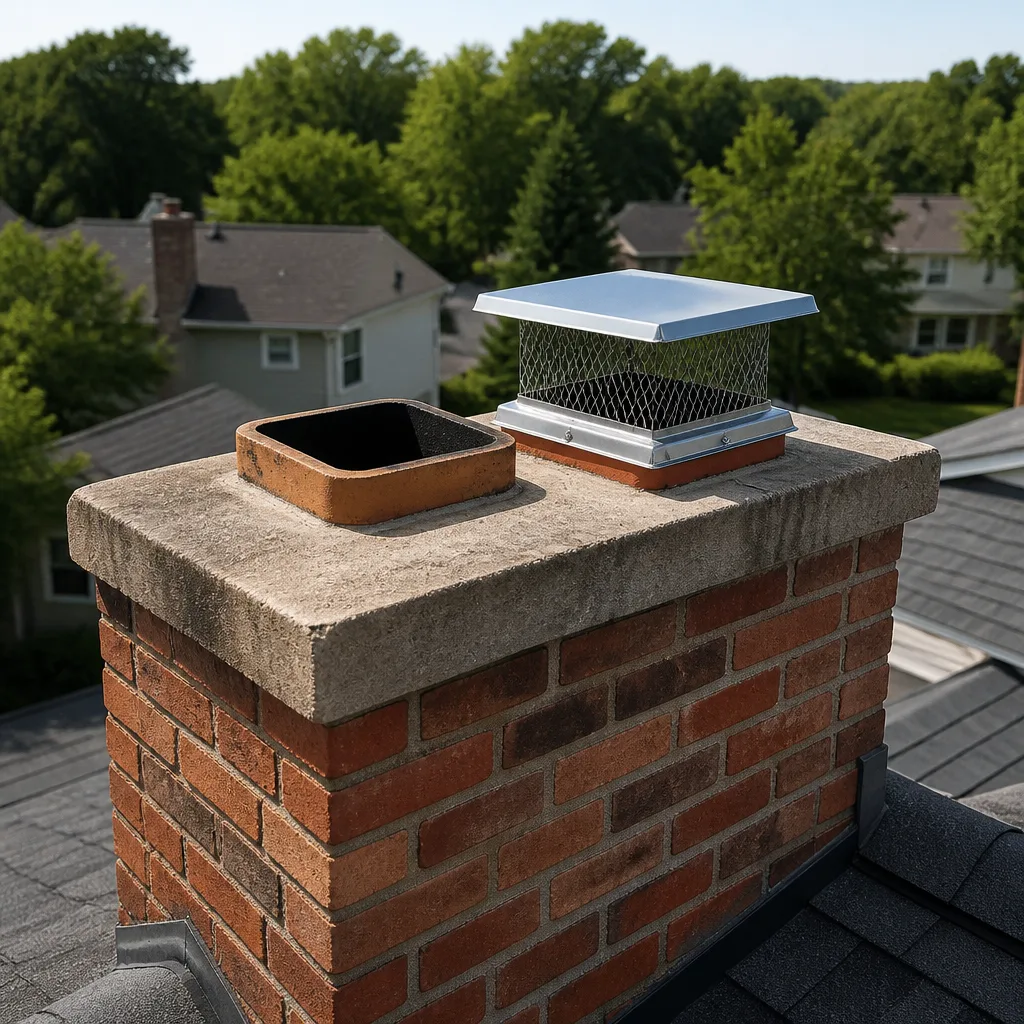
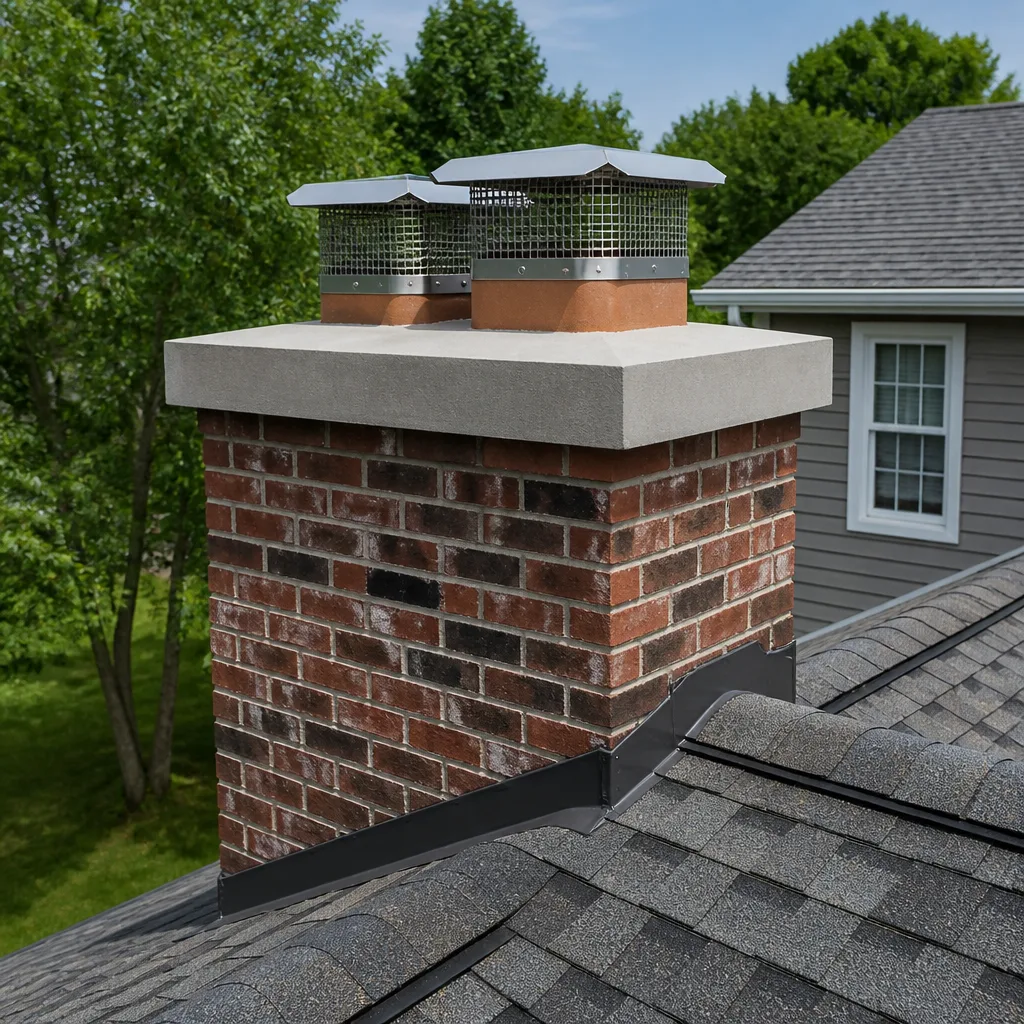
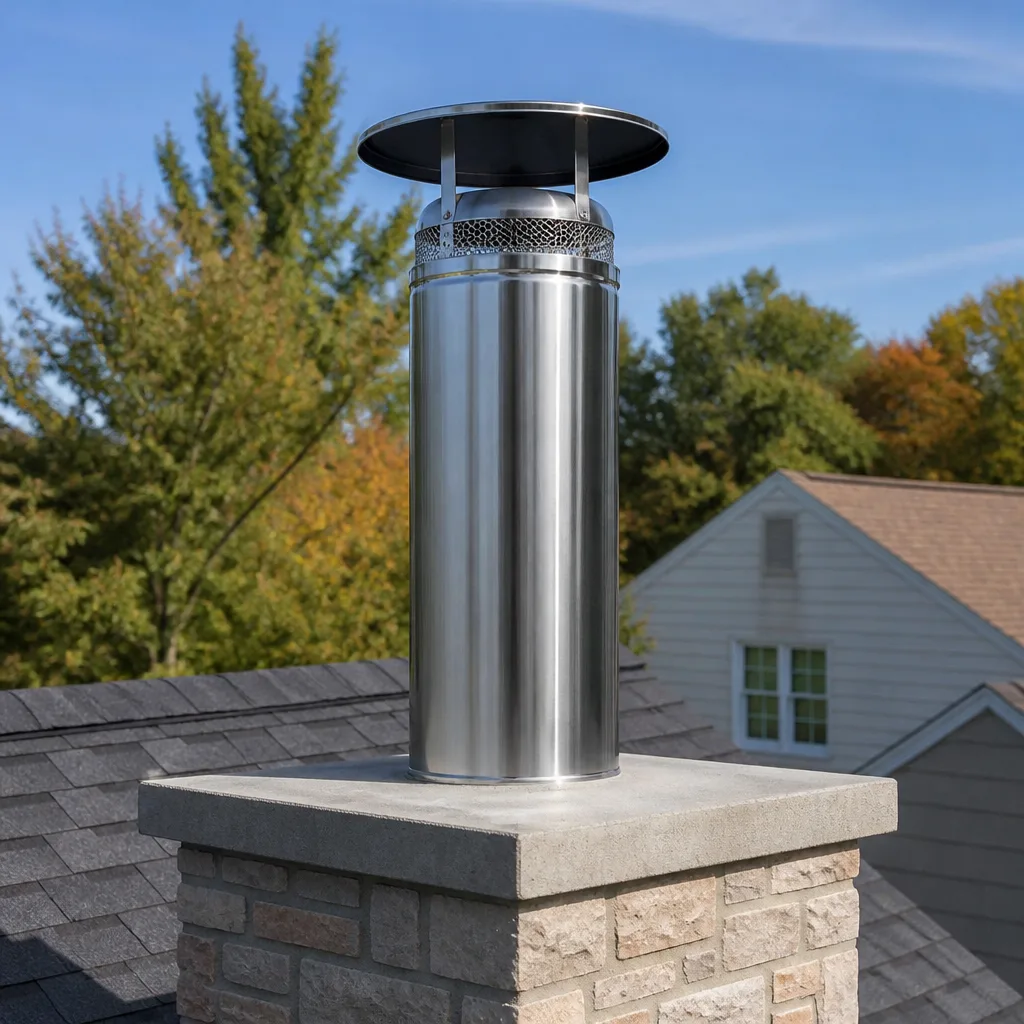
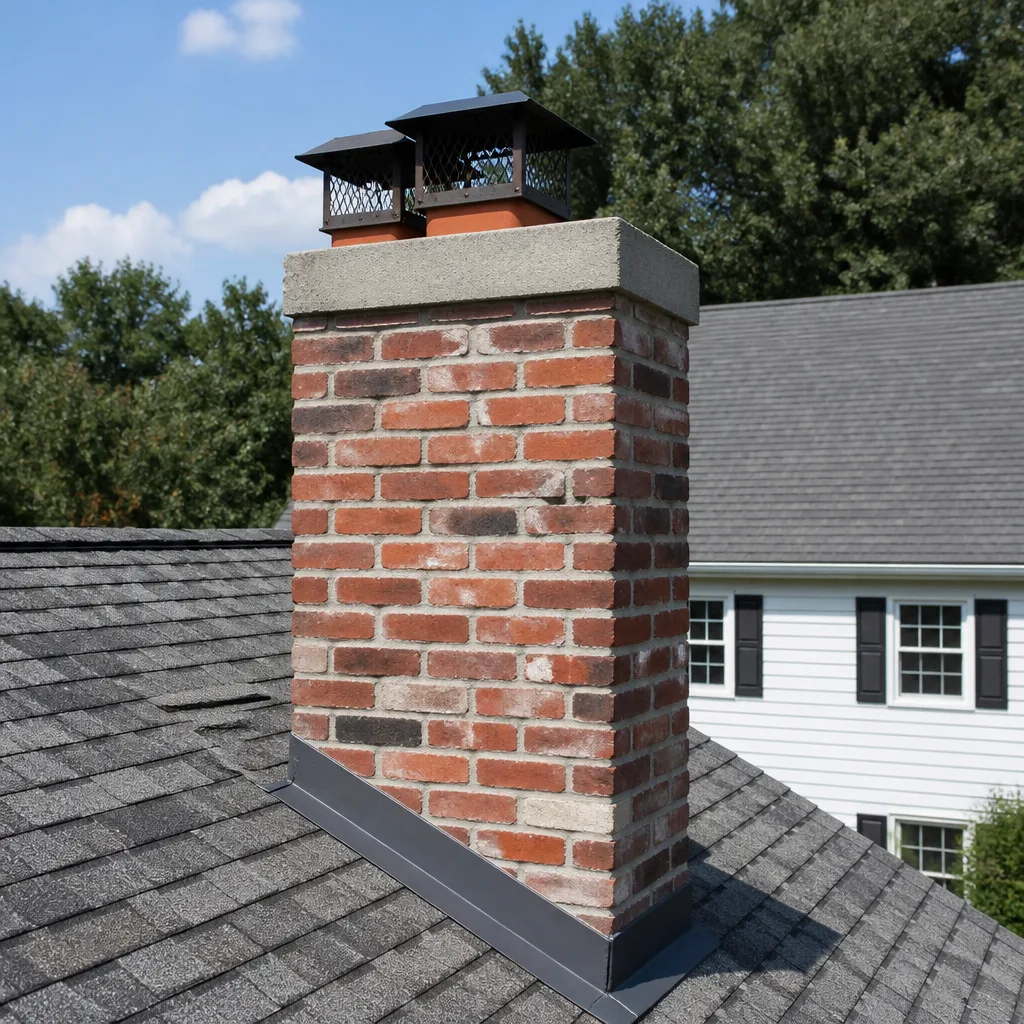
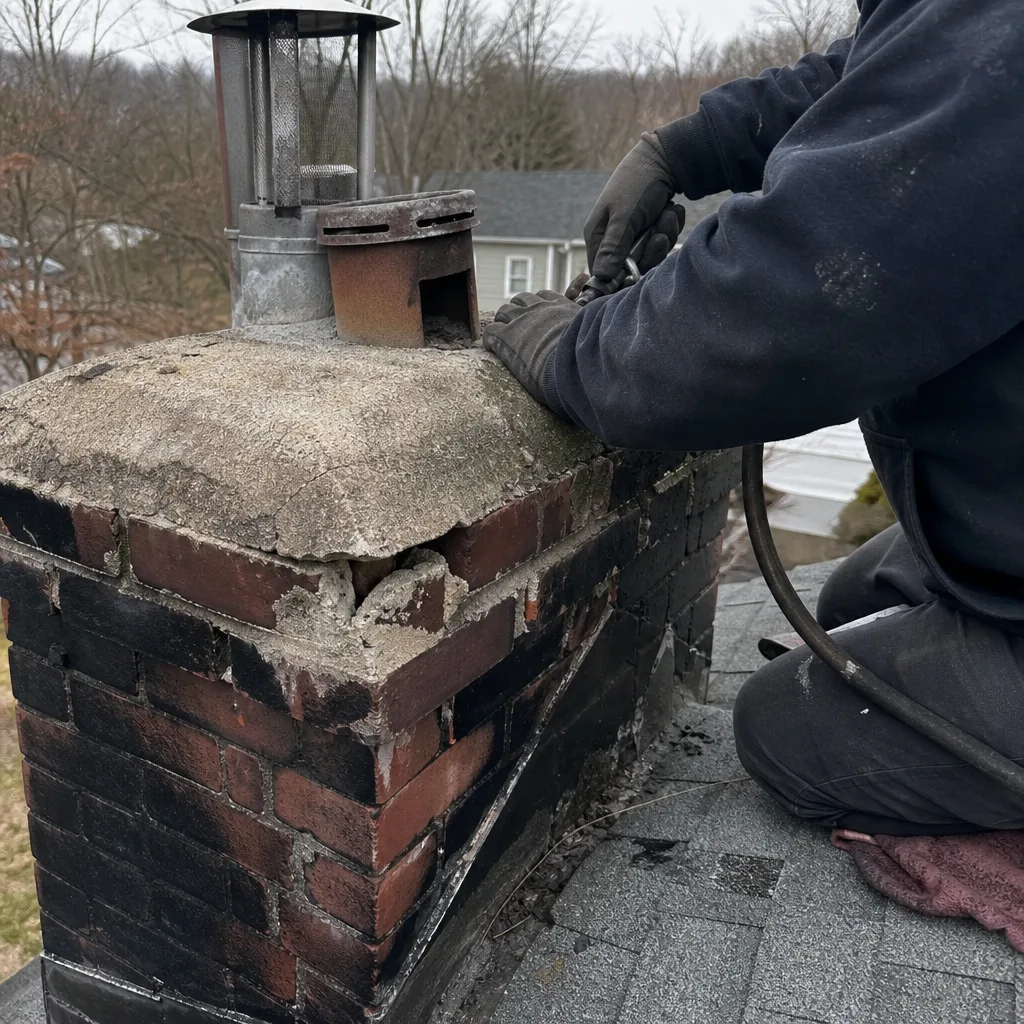 Before
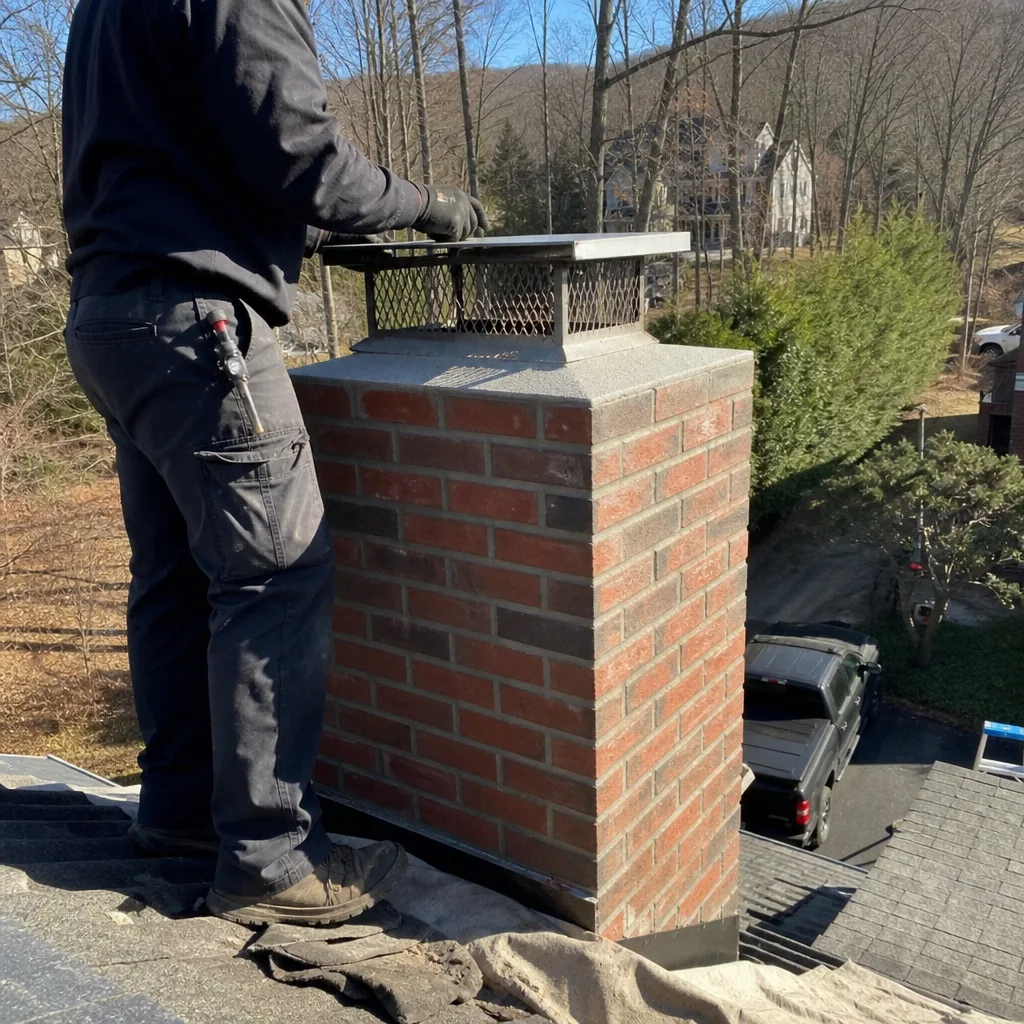 After
After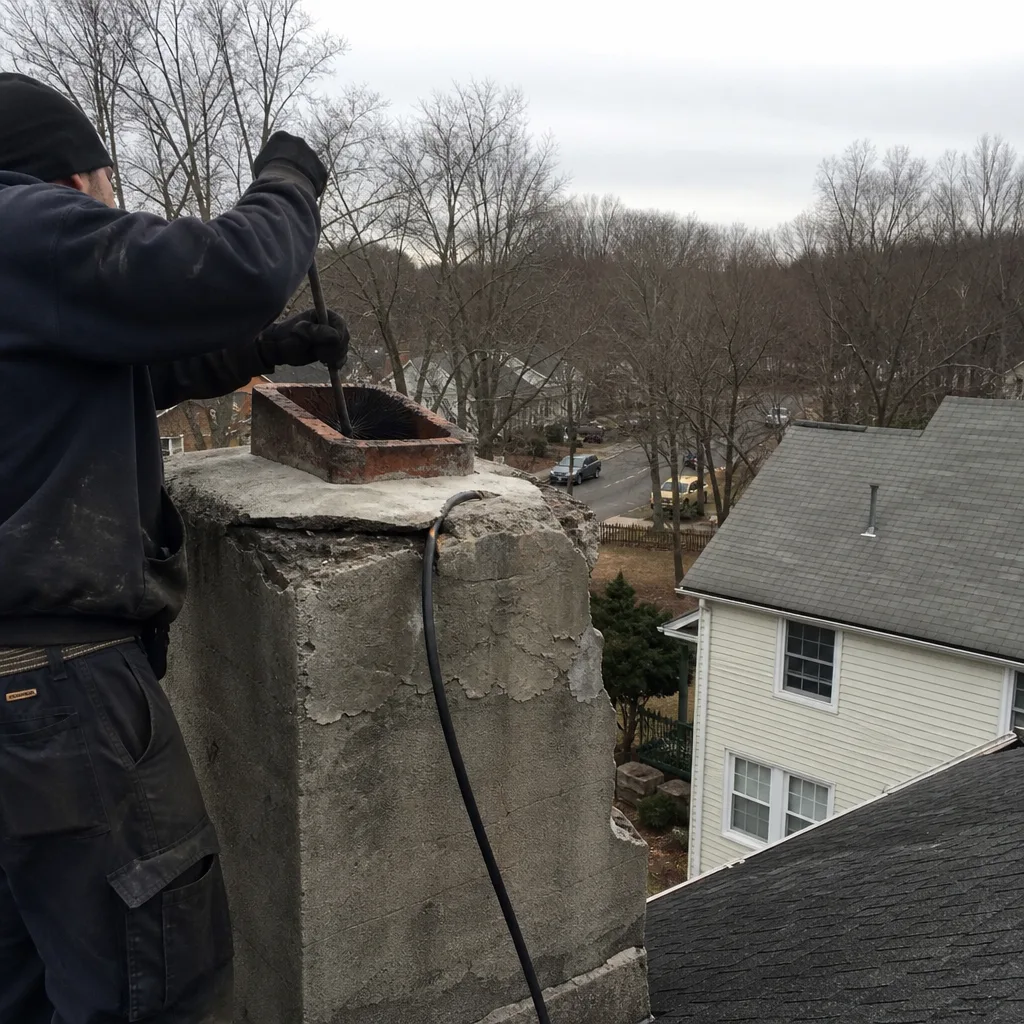 Before
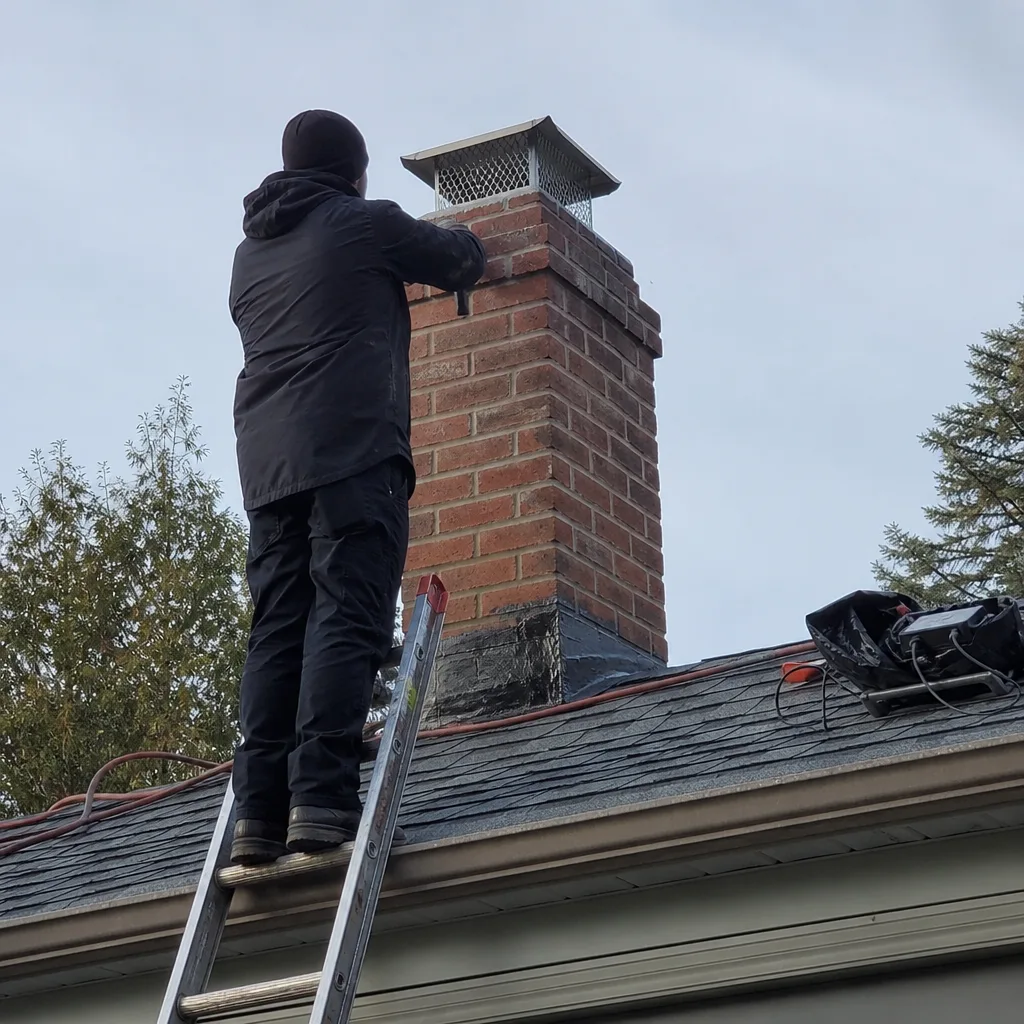 After
After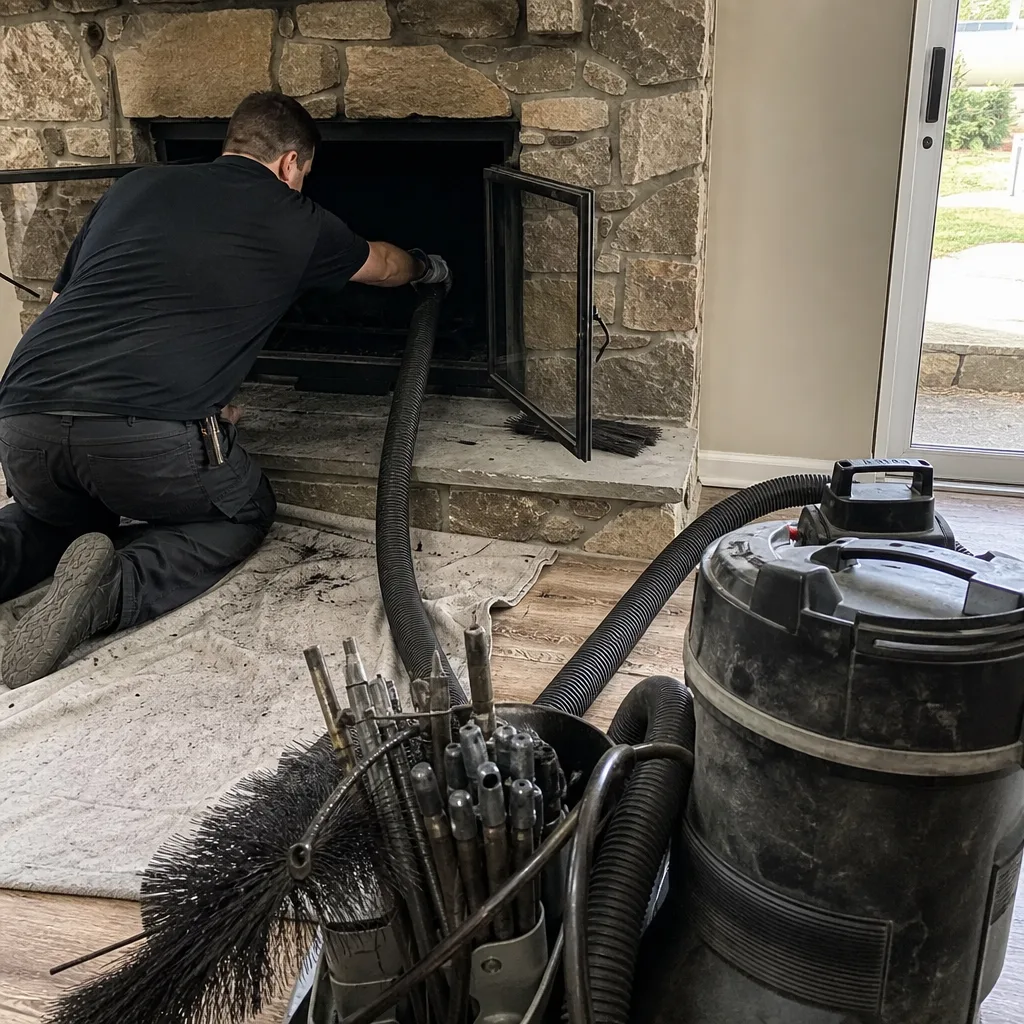 Before
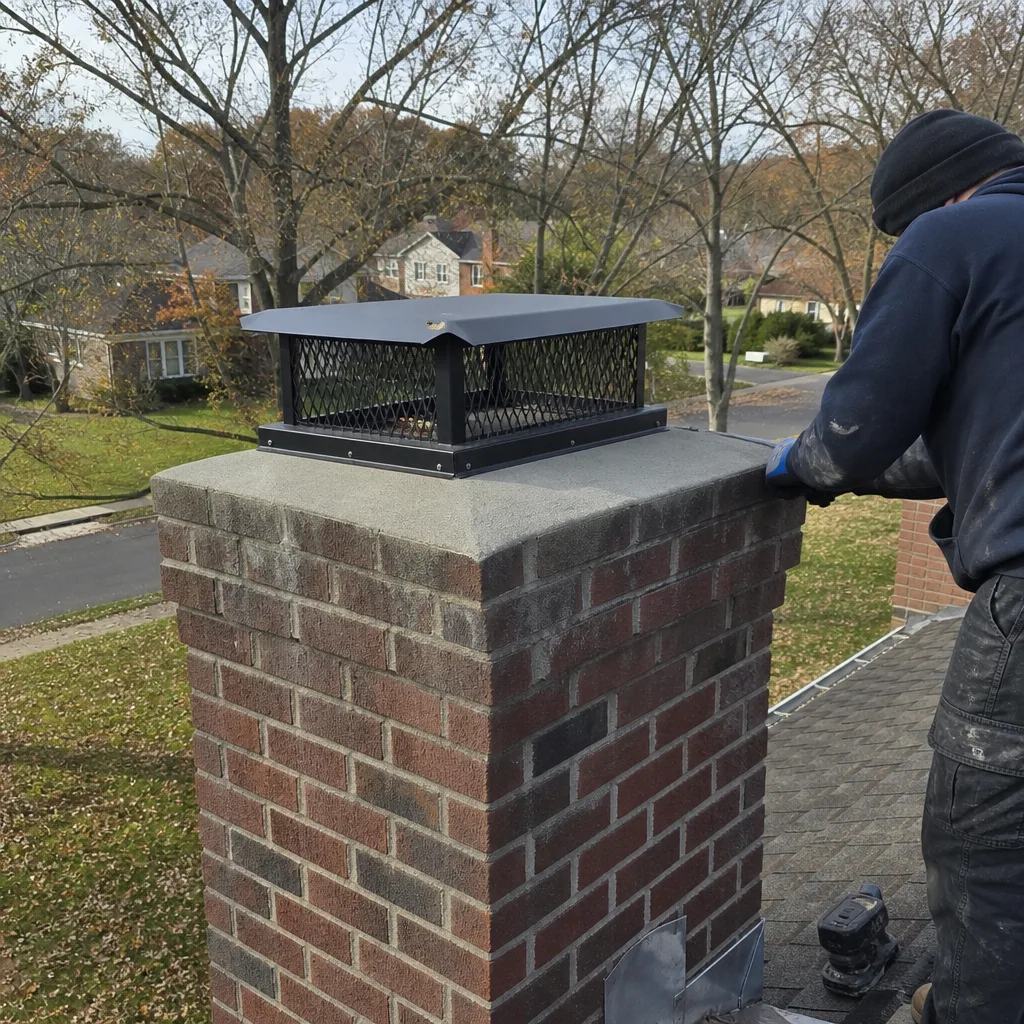 After
AfterCreosote Removal in Rockland County, NY
Creosote removal is the process of clearing the hardened, flammable byproduct of wood combustion from the inside of your flue liner before it becomes a fire hazard. In Rockland County, where a lot of homeowners run their fireplaces hard from October through March and then let the chimney sit untouched for seven months, creosote buildup is one of the most common – and most underestimated – problems we find. Most jobs can be handled during our Chimney Cleaning & Sweep services; the heavier third-degree glazed deposits require chemical treatment and rotary tooling that goes well beyond a standard brush run.
Top Hat Chimney has been handling creosote removal in Rockland County since 1999. Wendell Pike started the company, and he still runs it the same way: show up on time, give you an honest read on what’s in the flue, and charge you the number we said on the phone – not a dollar more. If you want to know what’s in your chimney before winter, schedule a Level 1 Inspection and call us at (845) 599-0832. A live person will pick up.
Creosote removal is part of what we do as part of our full Chimney Cleaning & Sweep in Rockland County service – it is not a separate upsell we spring on you at the door.
The Three Stages of Creosote – and Why Stage Matters
Not all creosote is the same, and the treatment changes significantly depending on how far the buildup has progressed. Here is a plain breakdown of what each stage actually looks like inside the flue and what it means for your removal job:
- First-degree creosote is the dusty, flaky deposit that comes from occasional, well-drafted fires. It brushes away cleanly during a standard sweep. If your chimney is inspected every year and you burn dry seasoned hardwood, this is likely all you have.
- Second-degree creosote is the dark, tar-like layer that forms when smoke cools too quickly – common in chimneys with undersized flues or homeowners who run low, smoldering fires to “stretch out” a cord of wood. It is considerably harder to remove and usually requires a rotary brush system and a second pass to clear properly.
- Third-degree creosote is a glazed, shiny, nearly impermeable coating that bonds to the liner the way enamel bonds to a bathtub. Brushes alone will not touch it. Removal requires a chemical treatment – typically a dry application of a professional-grade creosote modifier – followed by a rotary cleaning once the glaze has been converted to a brushable ash. This is a job for a trained sweep. Third-degree deposits have been the ignition source for chimney fires that spread to the framing above. Do not let anyone with a shop vac and a brush tell you they can handle this in twenty minutes.
In Rockland County, we see a lot of second and third-degree buildup in older homes in Haverstraw, Stony Point, and West Haverstraw – places where the houses were built with masonry chimneys in the 1950s and 1960s that were never lined with a properly sized terra-cotta or stainless insert. The flue is often too large for the modern insert or stove connected to it, smoke slows and cools inside, and creosote layers up fast. Catch it before stage three, and the removal is straightforward. Once it has glazed over, the clock is running.
When You Need Creosote Removal
- You smell a heavy wood-smoke or tar odor inside the house even when the fireplace is not in use. This is often creosote off-gassing through the liner – a reliable sign that buildup is significant enough to need attention before you light the next fire.
- You have not had the chimney swept in two or more years but used the fireplace regularly. In Rockland County, where winters run from late October through early April, a heavily used fireplace can accumulate enough creosote in a single season to move from first to second degree.
- Your fires produce a lot of smoke, struggle to draw, or smoke rolls back into the room. A blocked or partially blocked flue caused by creosote restricts airflow, which makes the problem worse – low-draft fires produce more creosote.
- You have experienced a chimney fire – even a small one. A chimney fire dramatically accelerates creosote into the third-degree glaze. Even if the fire seemed minor and you see no visible damage, the liner needs a full inspection and likely a chemical creosote treatment before the fireplace is used again.
- Your inspection report from another sweep listed “heavy creosote deposits” without specifying degree or treatment plan. We offer a free second opinion on any written estimate. Bring the report and we will tell you exactly what you are looking at.
- You burn green or wet wood, or you run low, slow fires to extend your wood supply. Both practices are among the fastest ways to build up second-degree creosote. If this describes your wood habits, have the chimney looked at mid-season, not just at the annual sweep.
Our Creosote Removal Process
We do not cut corners, and we do not skip steps because a job looks routine from the outside. Here is what happens on a creosote removal visit:
- Visual and camera inspection first. Before any tools come out, we run a camera through the flue from top to bottom. You see the same footage we see, and we give you a plain-English read on what degree of buildup you have, whether there is any liner damage underneath the deposits, and what the job actually requires. No camera means no accurate diagnosis.
- Upfront pricing confirmed before we start. Once we know what we are dealing with, we give you the exact number. If it has changed from the phone estimate, we explain why before we touch the flue. The number you approve is the number on the invoice.
- Drop cloths, work area protection, and HEPA equipment set up. The crew lays drop cloths around the firebox and sets up negative-pressure HEPA containment before any brushing begins. Your living room should look the same when we leave as when we arrived.
- Stage-appropriate creosote removal. First and light second-degree deposits come out with professional rotary chimney brushes. Heavier second-degree and all third-degree glazed deposits receive a professional-grade dry chemical creosote modifier – we work with trusted industry products in this category – applied to the flue, allowed to work, and then cleared with rotary tooling on a follow-up or same-visit return, depending on the degree of conversion. We do not rush the chemistry.
- Firebox and smoke chamber cleaning. Loose creosote and soot fall into the firebox during the sweep. We vacuum it out completely, clean the smoke shelf, and inspect the damper for proper sealing while we are in there.
- Post-removal camera verification and written report. We run the camera a second time after cleaning. You get a written report of what we found, what we did, and the current condition of the liner. That report is what the 90-Day Done Right Promise is anchored to: if something was missed or incomplete, one call brings us back at no additional charge.
Creosote Removal Pricing in Rockland County
Creosote removal in Rockland County typically runs between $180 and $600, depending on the degree of buildup, flue height, and whether chemical treatment is required. A standard first-degree sweep is on the lower end; heavy third-degree glazed deposits requiring chemical modifier, rotary tooling, and a return visit sit at the higher end. Here is an honest breakdown:
| Service | Typical Range |
|---|---|
| Level 1 sweep including light creosote (first-degree) | $180 – $260 |
| Rotary cleaning for second-degree buildup | $250 – $380 |
| Chemical creosote modifier + rotary for third-degree glaze | $380 – $600 |
| Camera inspection (included with all cleaning jobs) | $0 (included) |
A few things that affect the final number: flue height matters (a three-story chimney in Suffern takes longer than a single-story in Nanuet), chimney access matters (a chimney tucked against an addition or behind a steep roofline adds time), and liner condition matters (if we find cracked tiles or a failed liner under the creosote, we will tell you before we proceed). There are no surprise fees added at the door.
Standing offers you should know about: $40 off any repair over $200, a 10% discount for seniors and veterans (always, no expiration), and a free second opinion on any competing written estimate. No trip charge for calls inside Rockland County. Call (845) 599-0832 for a free estimate – upfront pricing is part of how we work, not a promotional add-on.
What Happens If You Skip Creosote Removal
The honest answer is that nothing happens right away, and that is part of the problem. Creosote is patient. It builds up season by season, and the flue looks fine from the firebox until the night you light a fire that runs a little hotter than usual and the glaze ignites. A chimney fire can reach temperatures above 2,000 degrees Fahrenheit inside the flue. At that temperature, clay liner tiles crack, mortar joints fail, and if there are gaps in the liner, heat transfers directly into the framing behind the chimney stack. We have performed a Level 2 Inspection on chimneys in Spring Valley and Pomona after exactly this sequence, and the homeowners had no idea a fire had even occurred until they smelled something burning in the walls.
Homeowner’s insurance in New York does cover chimney fires in most cases, but claim adjusters ask for maintenance records. An annual inspection and cleaning receipt is your documentation. No receipt, no easy claim. That is worth mentioning plainly.
Once a year, burn or no burn. Chimneys change in the off-season too – mortar cracks, animals nest, liners shift. The creosote removal visit is the same appointment as the annual inspection, not a separate trip.
Why Rockland County Homeowners Call Top Hat Chimney
Wendell Pike founded Top Hat Chimney in 1999, and he still runs the crew that shows up at your door. That is not a detail that appears on our home page just for show – it is the reason the work holds up. When a sweep puts his name on the invoice, he has a reason to do it right the first time.
We are not a franchise. We did not rotate into Rockland County last year. Wendell has been working chimneys in Clarkstown, Ramapo, Haverstraw, and Orangetown for over two decades. He has seen what happens when a creosote inspection is rushed or when a third-degree glaze is “cleaned” with a brush that was never going to touch it. The 90-Day Done Right Promise exists because that guarantee matters more when Wendell runs into you at the hardware store on Saturday than when a national scheduling center processes your callback.
All technicians are background-checked and arrive in uniform. You get a real arrival window and a call if anything shifts. Phones are answered around the clock by a live person – it may well be Wendell himself. Upfront pricing is delivered before any work begins, and the number does not change between the driveway and the firebox.
We work with trusted industry products including DuraFlex liner systems and Copperfield chimney tools – equipment that holds up in the field, not catalog props.
Key Takeaways
- Creosote comes in three degrees; treatment is different for each. First-degree brushes away; third-degree requires chemical conversion before mechanical cleaning.
- Rockland County homes with older, oversized masonry flues – common in Haverstraw, Stony Point, and Spring Valley – are especially prone to second and third-degree buildup.
- A chimney fire can occur with no warning and reach temperatures that crack liner tiles and compromise framing. Annual removal is not optional maintenance.
- Pricing in Rockland County runs $180 to $600 depending on degree of buildup. Camera inspection is included in every cleaning job.
- Top Hat Chimney has served this county since 1999. Wendell Pike’s name is on every job, and the 90-Day Done Right Promise is in writing.
- $40 off repairs over $200; 10% off always for seniors and veterans; no trip charge inside the county.
FAQs – Creosote Removal
How much does creosote removal cost in Rockland County?
Creosote removal in Rockland County typically costs between $180 and $600, depending on the degree of buildup and the length and condition of your flue. First-degree deposits removed during a Fireplace Cleaning sit at the lower end; third-degree glazed creosote requiring a chemical modifier and rotary tooling runs higher. Camera inspection is included with every job at no additional cost. Call (845) 599-0832 for a free estimate – the number you hear on the phone is the number on the invoice.
Is creosote removal dangerous to do myself?
First-degree brushing is low-risk if you know how to access and seal your flue properly. Second and third-degree removal is genuinely hazardous – third-degree glazed creosote requires professional-grade chemical modifiers and rotary tooling, and an improper application can actually make the glaze harder to remove. Beyond the chemistry, working at height on a rooftop with inadequate equipment is where people get seriously hurt. For anything beyond light, dusty deposits, call a trained sweep. The cost of a professional removal is a fraction of what a chimney fire or a fall costs.
How do I know if I have dangerous creosote buildup?
Heavy tar or wood-smoke odor inside the house when the fireplace is not in use is one of the clearest signs. Other indicators: fires that are hard to start, smoke that rolls back into the room, a visible dark coating inside the firebox that looks shiny or tar-like rather than dusty, or a prior inspection report that flagged heavy deposits. If you have not had the chimney swept in two or more seasons and you burned regularly, assume second-degree deposits are present until a camera inspection tells you otherwise.
Can you remove third-degree creosote in one visit?
Sometimes, but not always. Third-degree glazed creosote requires a chemical modifier to convert the glaze to a removable ash, and that process takes time. Depending on the thickness of the glaze and the flue dimensions, we may apply the modifier, schedule a follow-up sweep once the conversion is complete, and confirm the result with a post-cleaning camera pass. We will tell you before we start whether one visit or two is the realistic plan – not after we have already billed you for the first one.
Schedule Your Creosote Removal in Rockland County
If you want to know what is in your flue before the next fire, give us a call. Top Hat Chimney has been working Rockland County chimneys since 1999, and Wendell Pike still answers the phone himself more often than not. Estimates are free, pricing is upfront, and the 90-Day Done Right Promise covers every job in writing. Seniors and veterans always get 10% off, and there is no trip charge for calls inside the county.
Call (845) 599-0832 any time – day or night, a live person picks up. Tell us your address, describe what you have been seeing, and we will give you a straight answer on what the job looks like and what it costs.
Written by Wendell Pike, Owner at Top Hat Chimney, serving Rockland County since 1999.